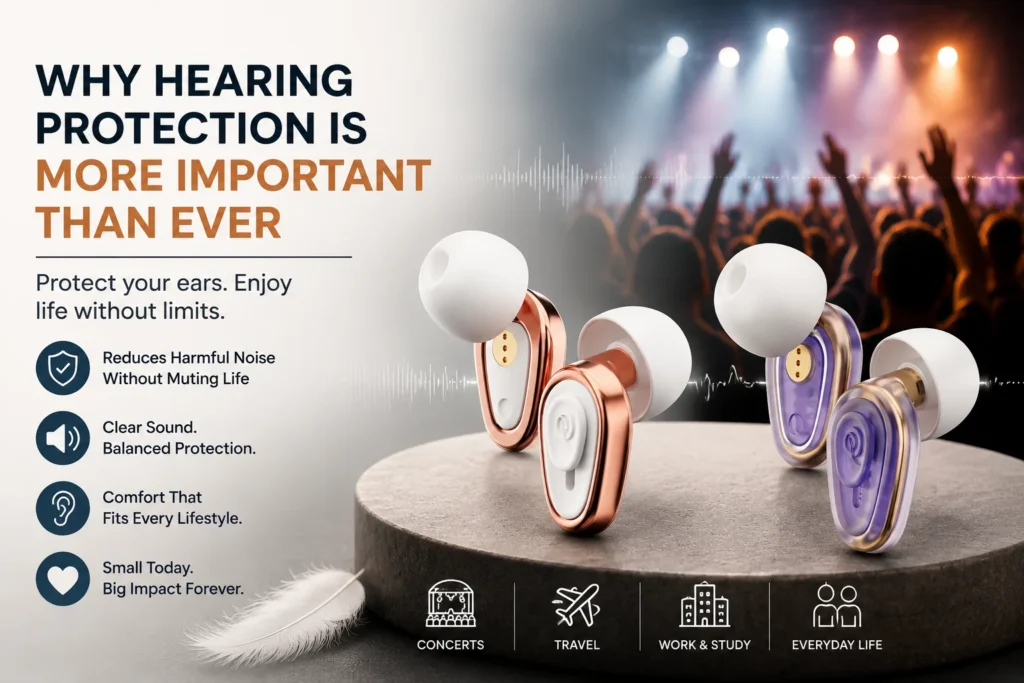

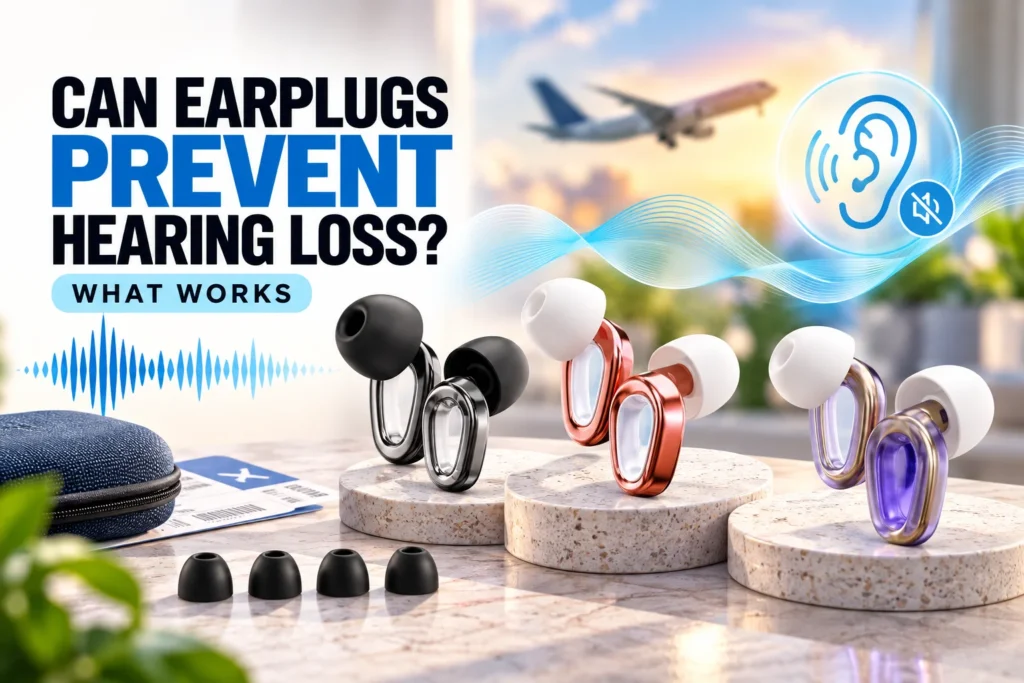
A single loud gig can leave your ears ringing on the train home. A loud motorbike commute can do it slowly, almost invisibly, over months and years. That is exactly why people ask: can earplugs prevent hearing loss? Used properly, in the right noisy environments, earplugs can significantly reduce the sound energy reaching your ears and lower your risk of noise-induced hearing damage.
The key word is reduce. Earplugs are not a force field, and no product can erase every risk. But a well-fitted pair is one of the simplest ways to take control of repeated, avoidable noise exposure without stepping away from the things you enjoy.
Can earplugs prevent hearing loss from loud noise?
Earplugs can help prevent noise-induced hearing loss by turning down harmful sound before it reaches the delicate structures of your inner ear. Inside the cochlea are tiny sensory hair cells that convert sound vibrations into signals your brain understands. They do not reliably grow back once damaged.
Very loud sound can injure these cells in one hit. More often, the damage builds through regular exposure: weekly club nights, power tools in the garage, machinery at work, amplified fitness classes, shooting sports, festivals, or long rides with wind noise under a helmet.
The amount of risk depends on three things: how loud the sound is, how long you are exposed to it, and how often it happens. As sound levels rise, safe exposure time drops sharply. That means a noise level that feels merely annoying can become a hearing issue when it lasts for hours.
Earplugs lower the level at your eardrum. This gives your ears more breathing room. They are most effective when you wear them before the noise starts, keep them in for the whole exposure, and choose a design with enough attenuation for the environment.
Hearing protection is about consistency, not bravado
Many people wait until sound feels painful before reaching for ear protection. That is too late as a strategy. Ringing, muffled hearing, or a feeling of fullness after a loud event can be a warning that your ears have had more than they can comfortably handle.
Noise damage is not always dramatic. You may still hear conversations perfectly well while gradually losing sensitivity to certain frequencies or struggling more with speech in busy places. Tinnitus – ringing, buzzing, hissing or other phantom sounds – can also be linked with noise exposure, although it has several possible causes.
Think of reusable earplugs as volume control for real life. You can still be present at a concert, on a commute, or in a shared office. You are simply cutting down unnecessary intensity.
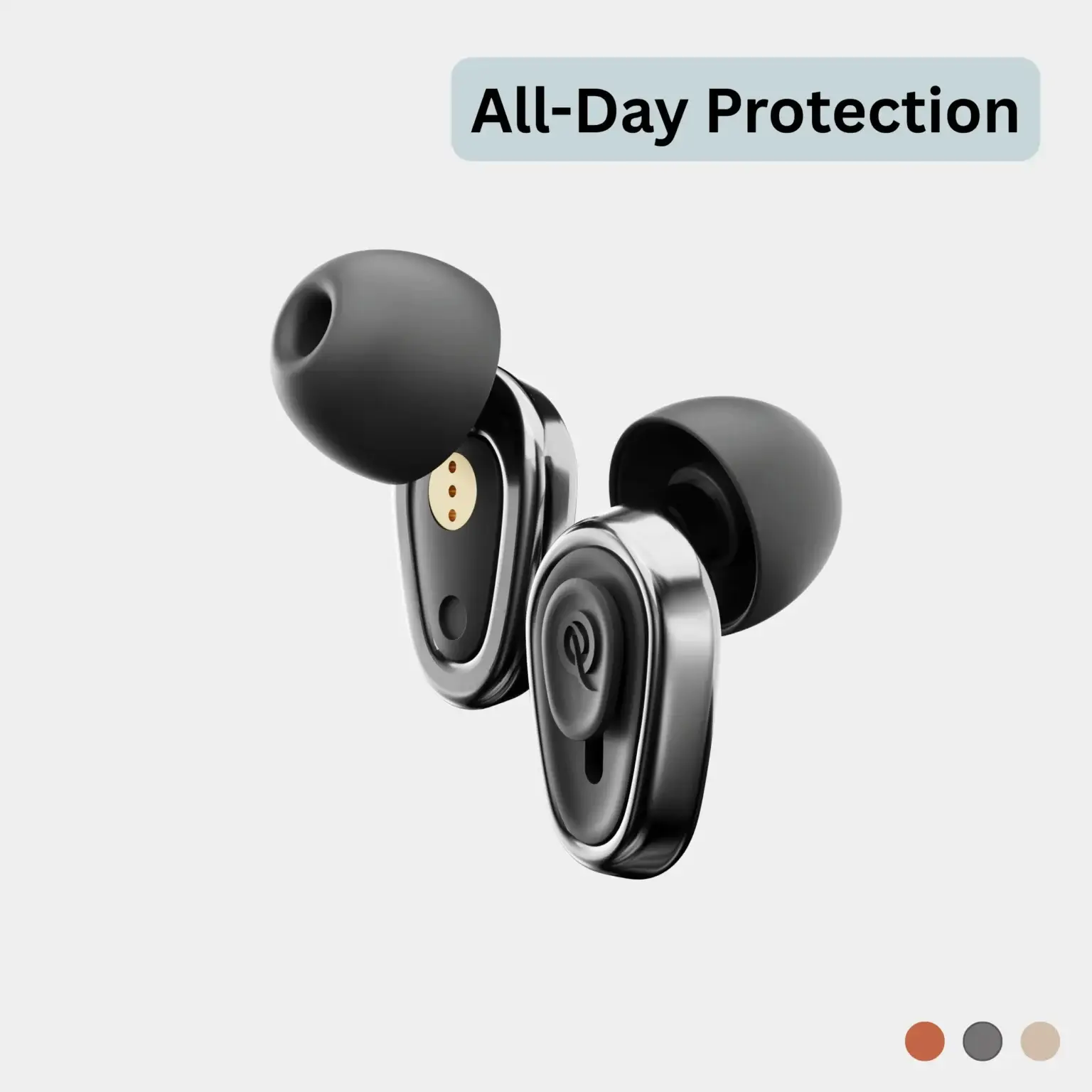
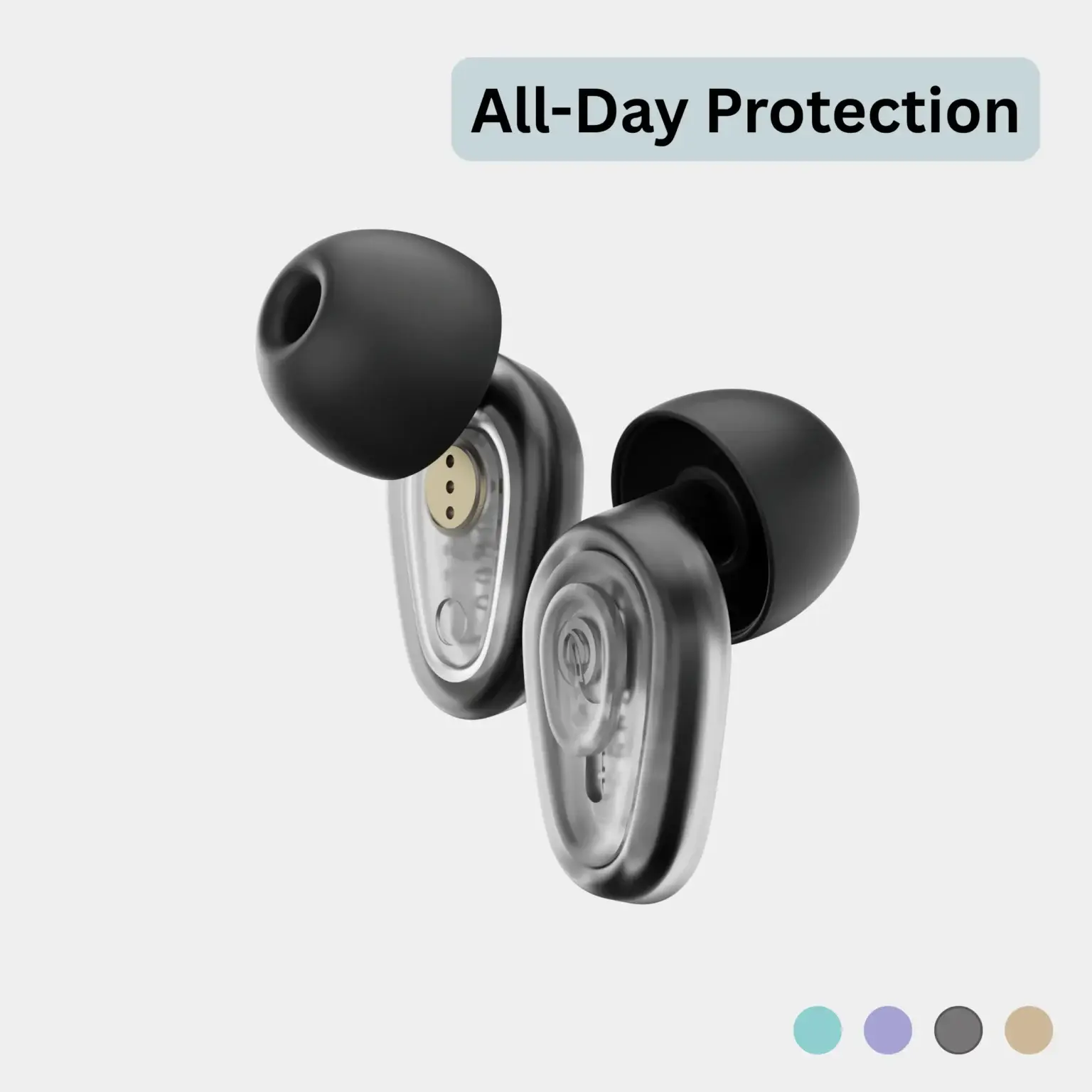
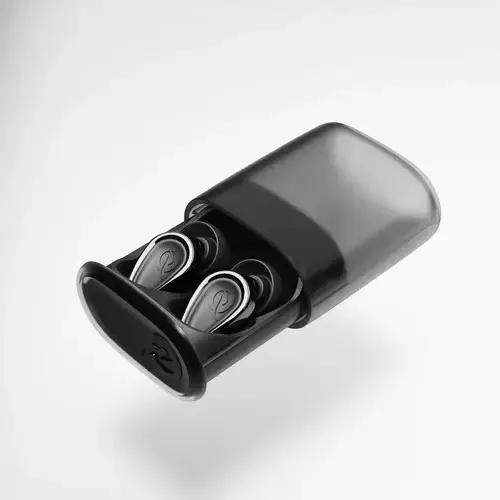
That makes them particularly useful for people who face loud noise often but do not want bulky defenders every time they leave the house. Low-profile plugs can fit into a routine far more easily, which matters because the best hearing protection is the pair you will actually wear.
The rating matters, but fit matters more
Earplugs are often sold with a noise-reduction figure. In the UK and Europe, you may see an SNR rating, while other products may use NRR. These figures indicate the sound reduction measured under test conditions, but they are not a personal guarantee of exactly the same reduction in every situation.
Your real-world protection is shaped by seal and fit. A plug that is half inserted, too small, uncomfortable, or constantly worked loose by jaw movement lets more sound through than its packaging suggests. Even a high-rated earplug cannot deliver its intended performance if it does not seal properly.
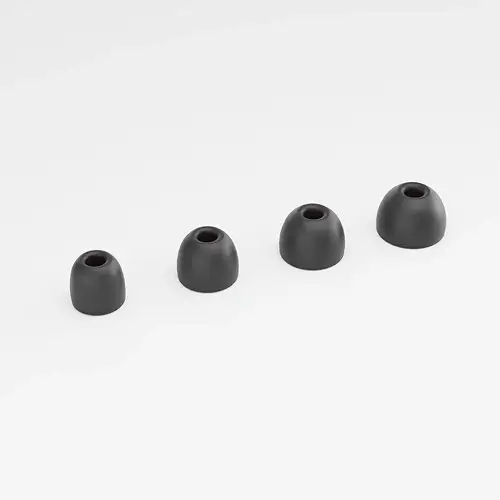
For everyday users, this means choosing comfort without treating it as a cosmetic extra. Soft eartips, multiple sizes, a secure fit and a shape that sits comfortably for several hours all improve the chances you will keep protection in place.
For very high noise levels, such as industrial equipment, firearms, or exceptionally loud motorsport, earplugs alone may not be enough. Follow workplace requirements, use properly rated protection, and consider doubling up with earmuffs when recommended. If your job exposes you to noise, your employer has responsibilities around assessment and hearing protection – do not rely on casual earbuds or fashion plugs as a substitute for approved PPE.
Where earplugs make the biggest difference
Concerts, clubs and festivals
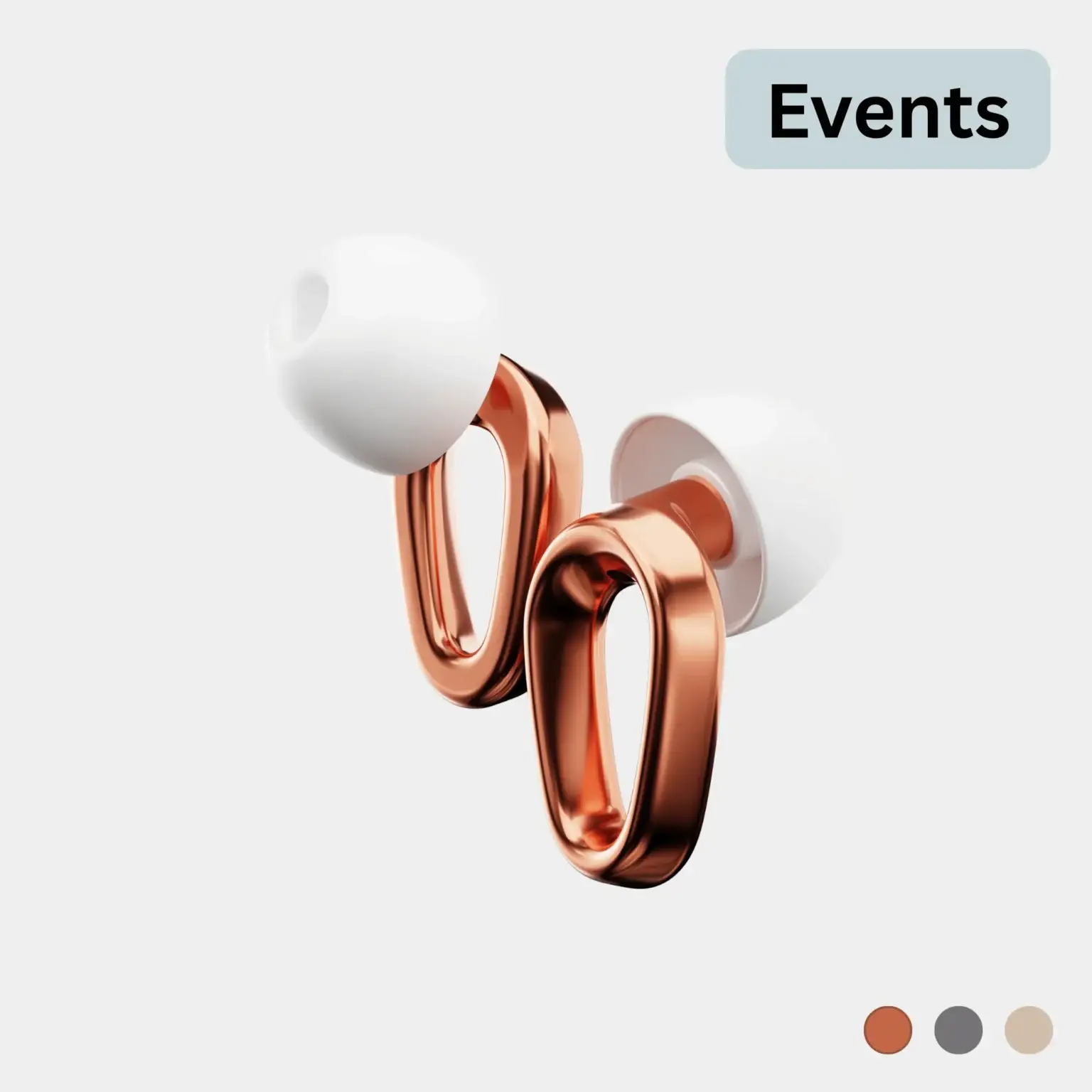
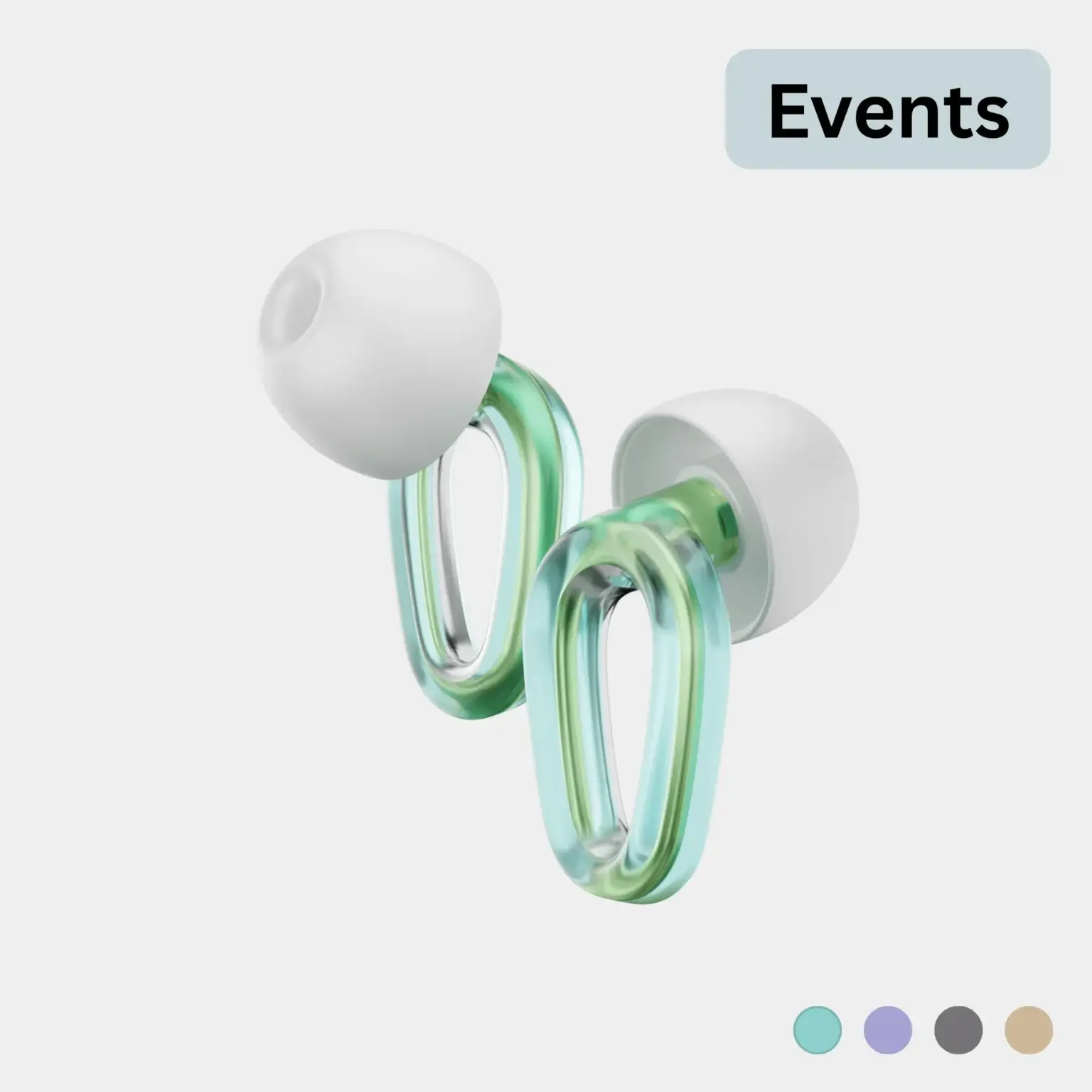
Music should feel powerful, not punishing. Concert earplugs are designed to reduce overall volume while preserving more clarity than basic foam plugs. The sound will not be identical to listening with uncovered ears, but it should be more comfortable and less harsh.
Wear them from the start, especially if you are close to speakers. Taking them out for the headline act defeats the point when that is likely the loudest part of the night. Bring a case, because a pair left loose in a pocket is a pair that tends to disappear before the encore.
Motorcycling and open-window driving
Engine noise gets attention, but wind noise can be the bigger long-distance problem. At speed, steady wind roar inside a helmet can create significant exposure over a ride. Slim, comfortable earplugs can reduce fatigue as well as help protect hearing, provided they do not interfere with your helmet fit or awareness of critical road sounds.
The same principle applies to regular driving with windows down, track days, and noisy public transport. You do not need to wait for a painfully loud moment. Repeated noise counts.
Work, DIY and lawn care
Circular saws, drills, grinders, leaf blowers and lawn mowers can all create levels that deserve more respect than they usually get. Keep earplugs where the task happens: in your tool bag, coat pocket or garage drawer. Protection that is close at hand is easier to use before you switch the machine on.
If the noise is continuous, intense, or part of your workday, choose certified hearing protection appropriate to the job. Earmuffz reusable earplugs are designed around everyday comfort and noise control, with product options certified to relevant CE, EN 352 and ANSI standards. Always check the specification for the exact model and use case.
Sleep, commuting and noise sensitivity
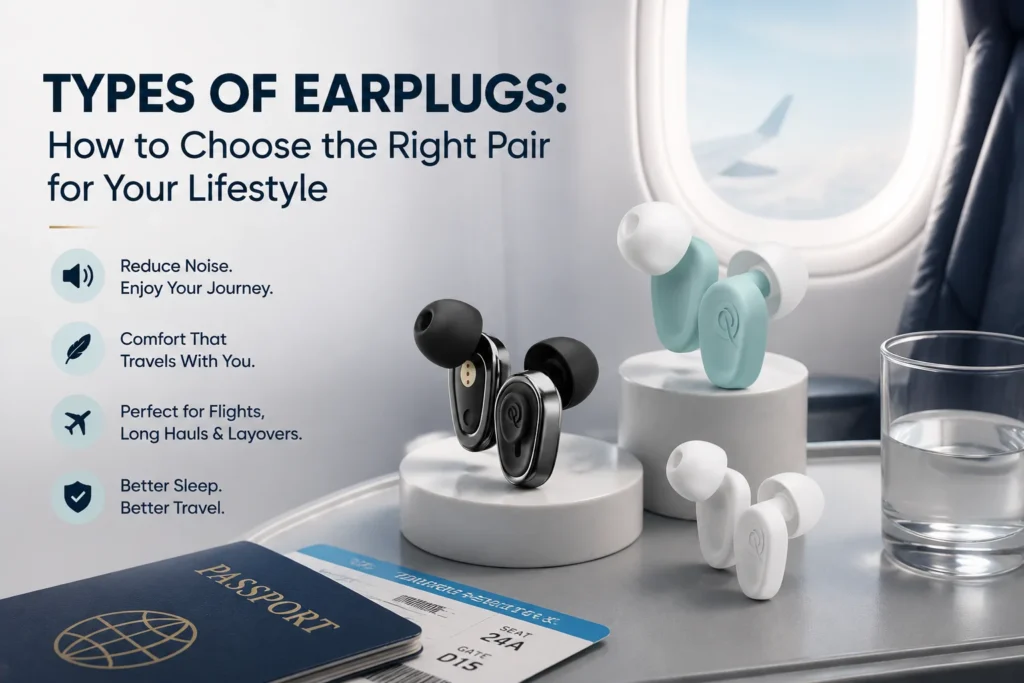
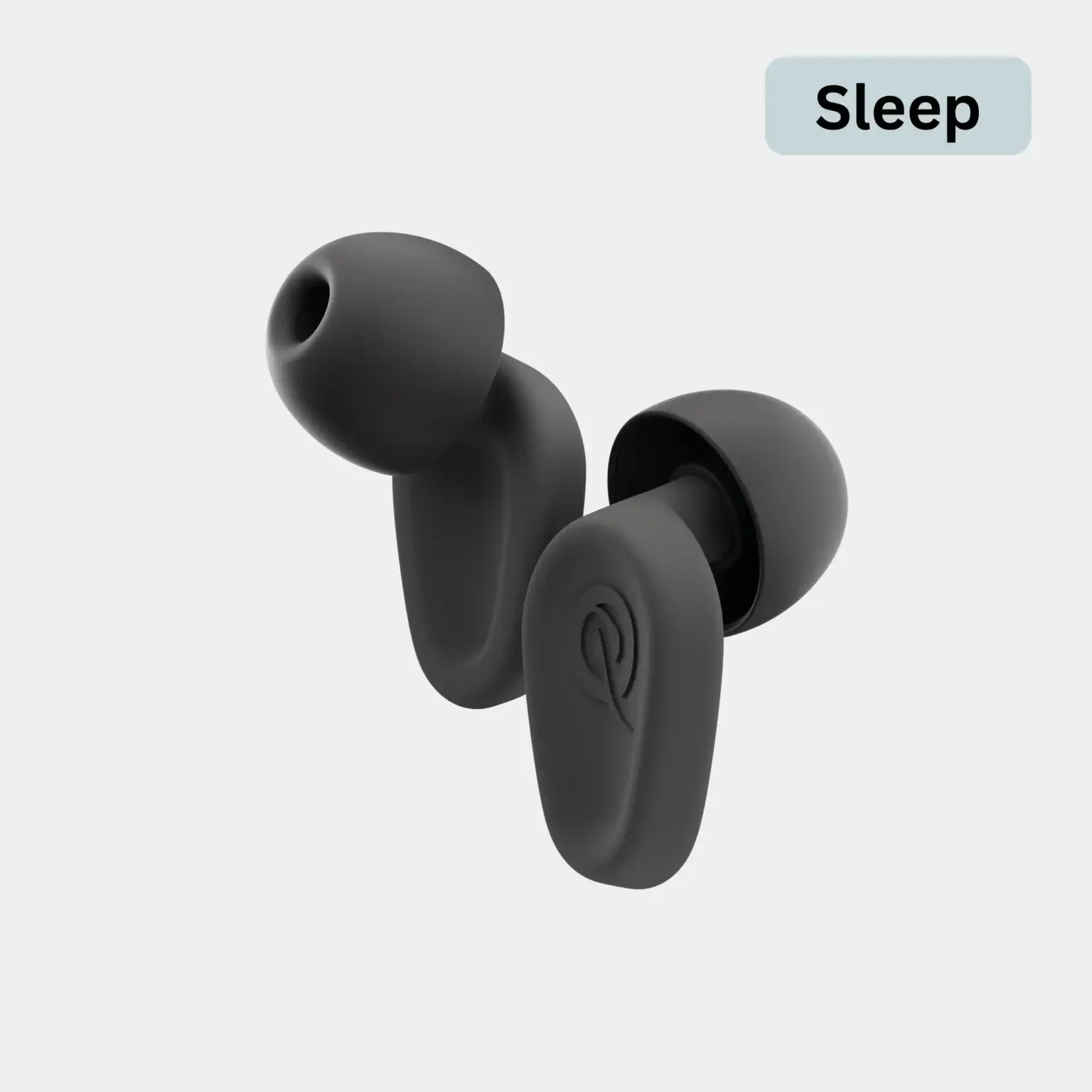
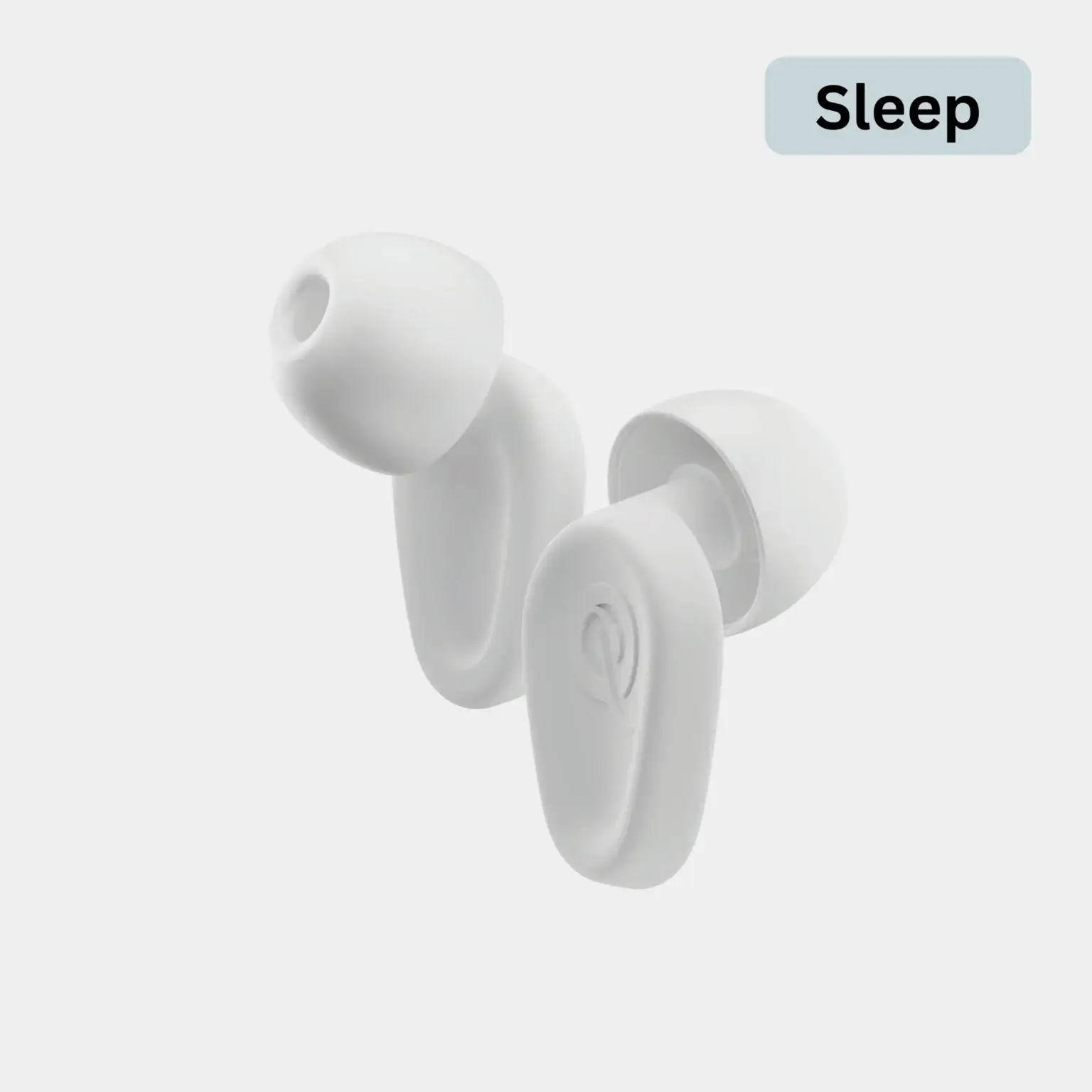
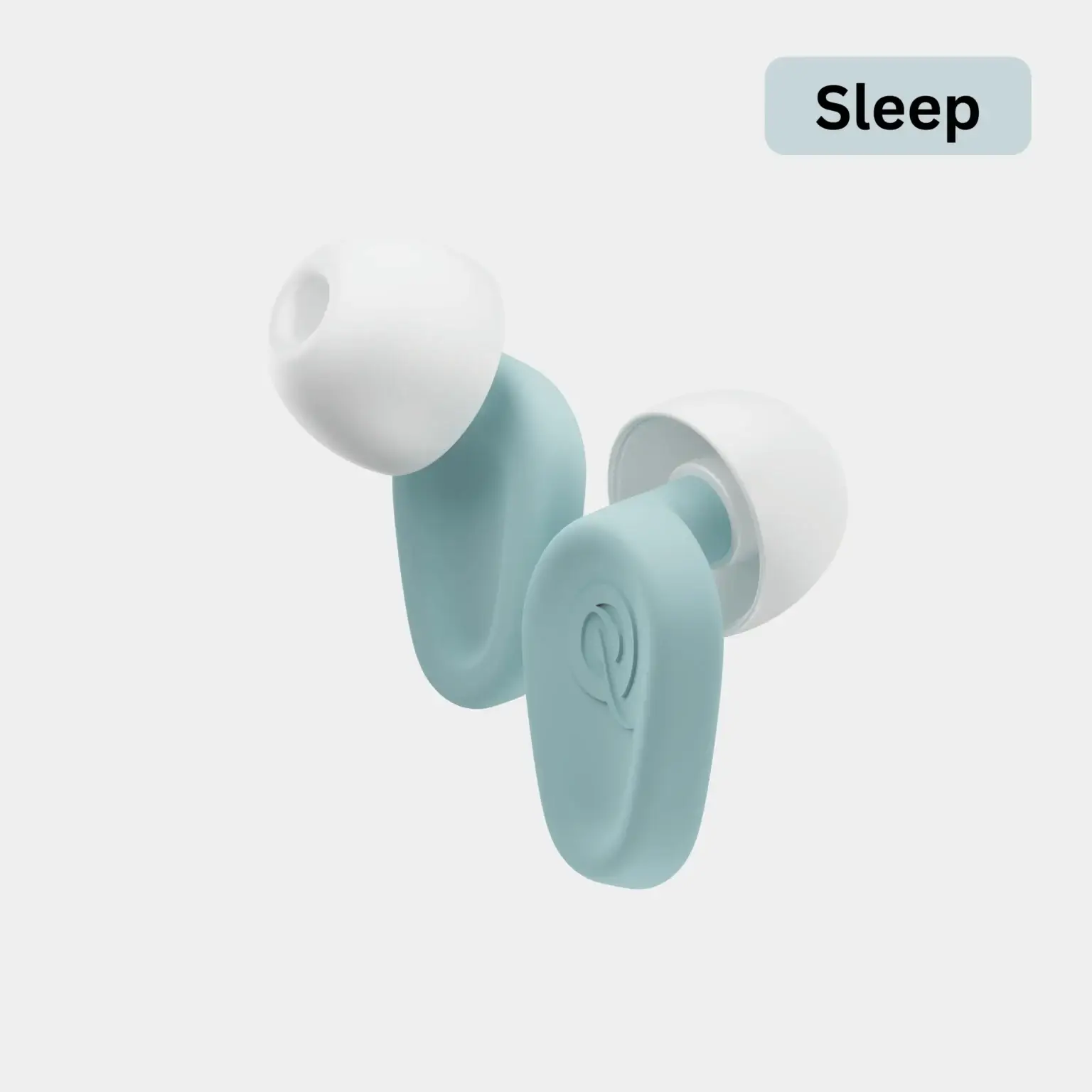
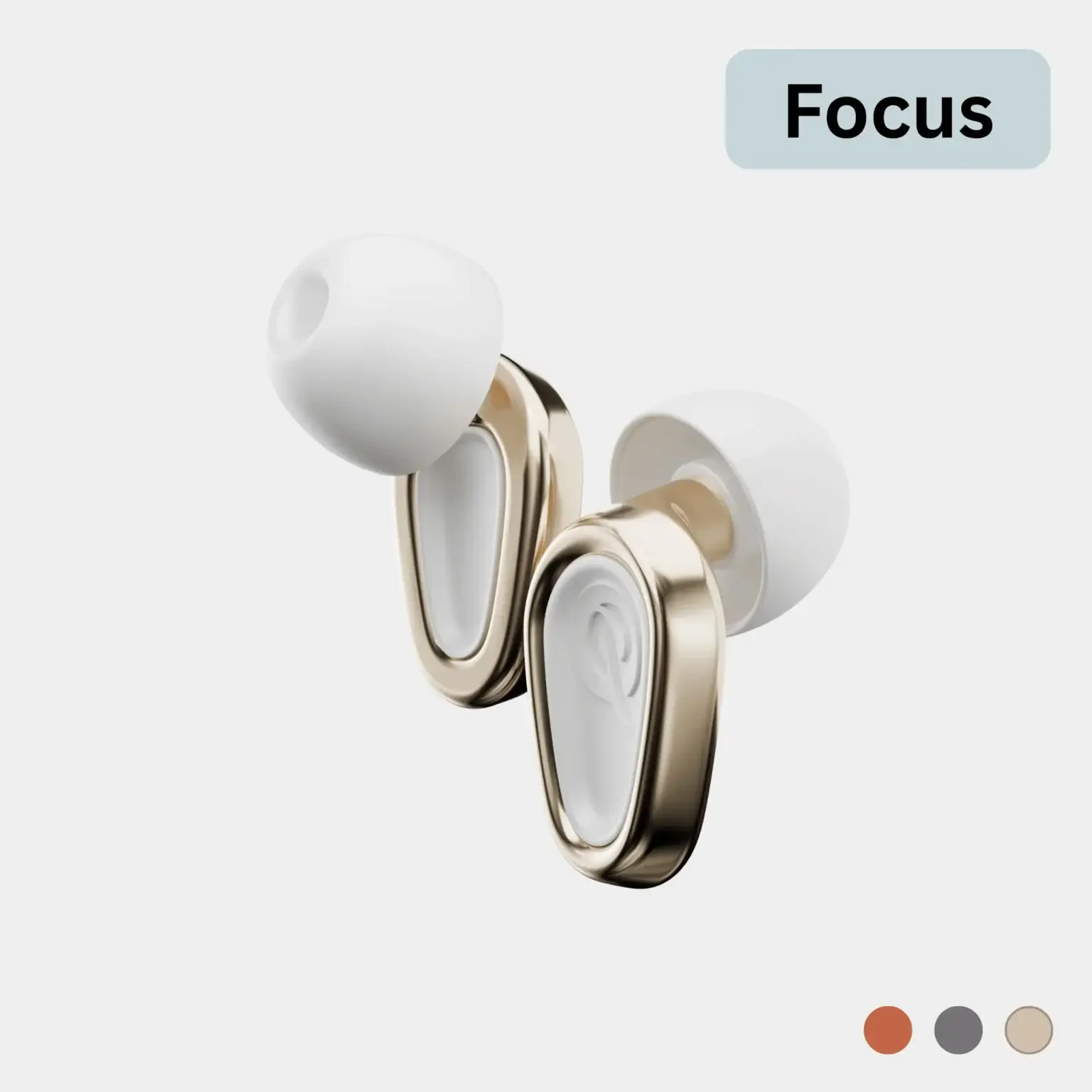
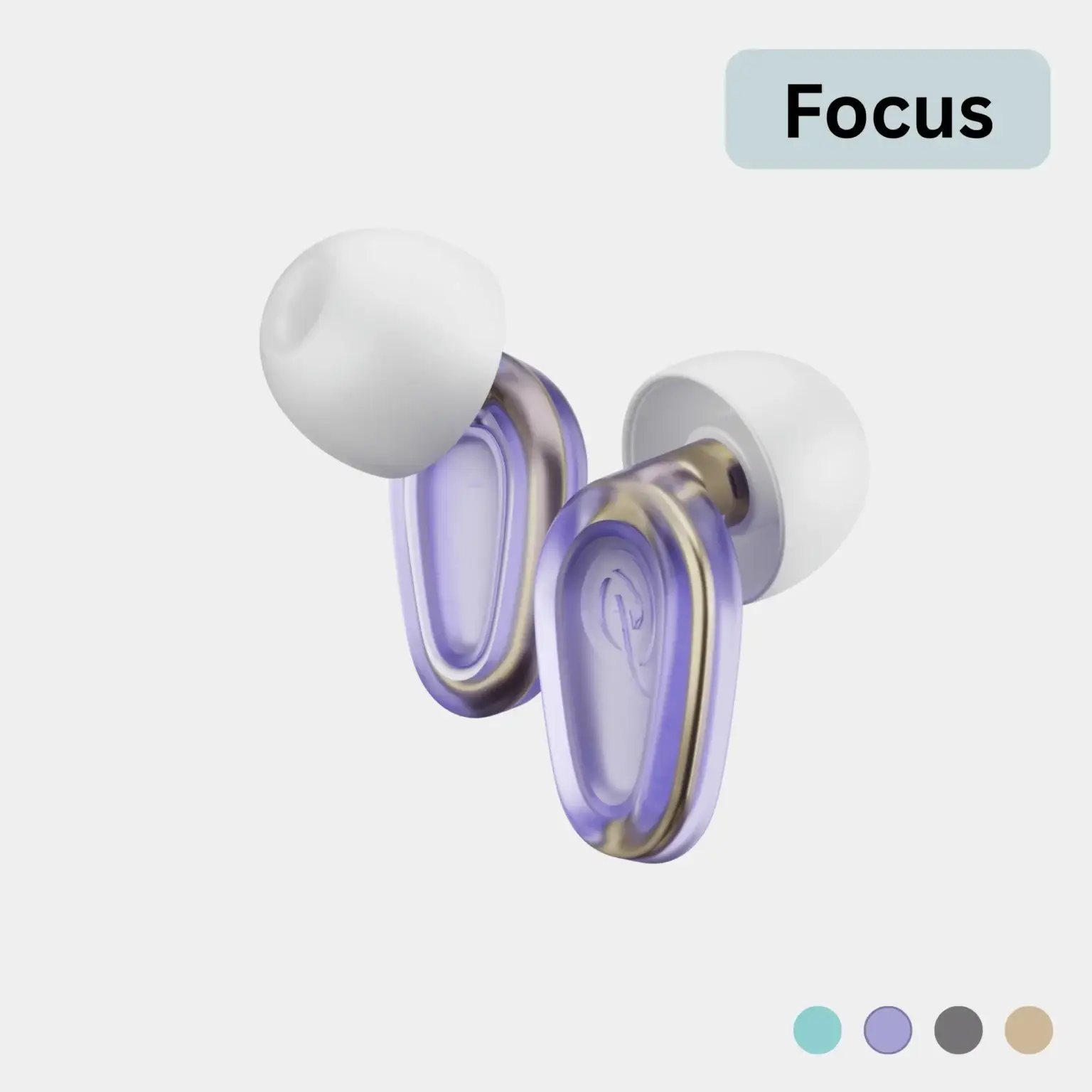
Sleep earplugs can reduce disruptive background sound, while commute and focus plugs can make noisy spaces feel less overwhelming. These uses can support comfort, concentration and recovery, but they are not always about preventing hearing loss. A quiet bedroom rarely needs the same level of protection as a music venue or workshop.
Use the right tool for the setting. At home, the goal may be calmer rest. Near loud noise, the goal is meaningful sound reduction. If you need to hear an alarm, a child, a colleague or traffic, avoid over-isolating yourself and choose a level of attenuation that leaves you appropriately aware.
How to get genuine protection from reusable earplugs
Start with clean hands and clean earplugs. Follow the fitting instructions for your specific design, then check the seal in a noisy but safe setting. The sound should drop noticeably and evenly. If one ear feels less protected, refit it or try a different tip size.
Do not remove and reinsert plugs unnecessarily in a loud environment. Every break in the seal is extra exposure. If you need to speak with someone, try talking normally first – conversation often remains possible, particularly with filtered plugs. Move to a quieter area if you need a proper conversation.
Care also protects performance. Reusable earplugs need regular cleaning and safe storage. Damaged tips, hardened material or a poor fit are signs it is time to replace parts or the pair. Never share earplugs, and avoid pushing anything deeply into the ear canal.
It is also worth separating hearing protection from noise-cancelling headphones. Active noise cancellation can make travel and low-frequency background noise more comfortable, but it is not automatically certified hearing protection. For a loud setting, use equipment specifically designed and rated for that purpose.
When earplugs are not enough
Earplugs reduce risk. They do not make extreme environments risk-free, and they cannot repair existing hearing damage. Step away from the source where possible, take quiet breaks, lower the volume, increase your distance from speakers or machinery, and limit total time in loud places.
Seek advice from an audiologist or GP if you have ringing that persists after noise exposure, sudden hearing loss, ear pain, discharge, dizziness, or hearing that stays muffled. Sudden changes in hearing need prompt medical attention. Earplugs are a smart prevention tool, not a replacement for professional care.
Your hearing is part of how you work, travel, connect and switch off. Keep a reliable pair of earplugs within reach, use them before the volume becomes a problem, and give your ears the quieter future they deserve.