

The cabin is loud, the seat is tight, and the person behind you has chosen take-off to start a full-volume film. So, are earplugs safe flying? For most people, yes. Well-fitted earplugs can make flying noticeably calmer by reducing the constant roar of engines, chatter and cabin clatter. The key is knowing what earplugs can do, what they cannot do, and when your ears need a little extra care.
Earplugs manage sound. They do not control the air pressure inside your middle ear. That distinction matters most during take-off and landing, when your body is working to equalise pressure naturally.
Are earplugs safe flying when cabin pressure changes?
In a healthy ear, the Eustachian tube connects the middle ear to the back of the nose and throat. It opens when you swallow, yawn or chew, allowing pressure to equalise as the aircraft climbs or descends. An earplug sits in the outer ear canal, so it does not block that tube or trap pressure behind your eardrum.
That means a properly used earplug is unlikely to cause cabin-pressure problems on its own. For most travellers, wearing earplugs throughout a flight is perfectly reasonable, including during take-off and landing.
However, comfort is personal. Some people dislike the sensation of having the ear canal sealed while pressure is changing. If you are prone to blocked ears, sinus congestion or intense discomfort on descent, you may prefer to loosen or remove standard earplugs for the final part of landing while you actively swallow, yawn or chew gum. Do what helps you equalise comfortably, not what sounds toughest.
Purpose-made pressure-regulating flight earplugs are another option. These use a small filter intended to slow pressure changes at the outer ear, which some travellers find useful. They are different from everyday noise-reduction plugs, so choose them for pressure comfort rather than expecting maximum noise reduction.
The real benefit: less cabin noise, less overload
Aircraft cabins are not quiet places. Engine noise, airflow and vibration create a steady background sound that can make conversation tiring, sleep difficult and a short flight feel much longer. Earplugs turn down that constant noise load.
The result is not silence. It is control. You can rest more easily, focus on a book or podcast at a sensible volume, and arrive with less of that drained, overstimulated feeling. For frequent flyers, sensitive ears, parents travelling with children and anyone managing tinnitus or noise sensitivity, that reduction can make a meaningful difference.
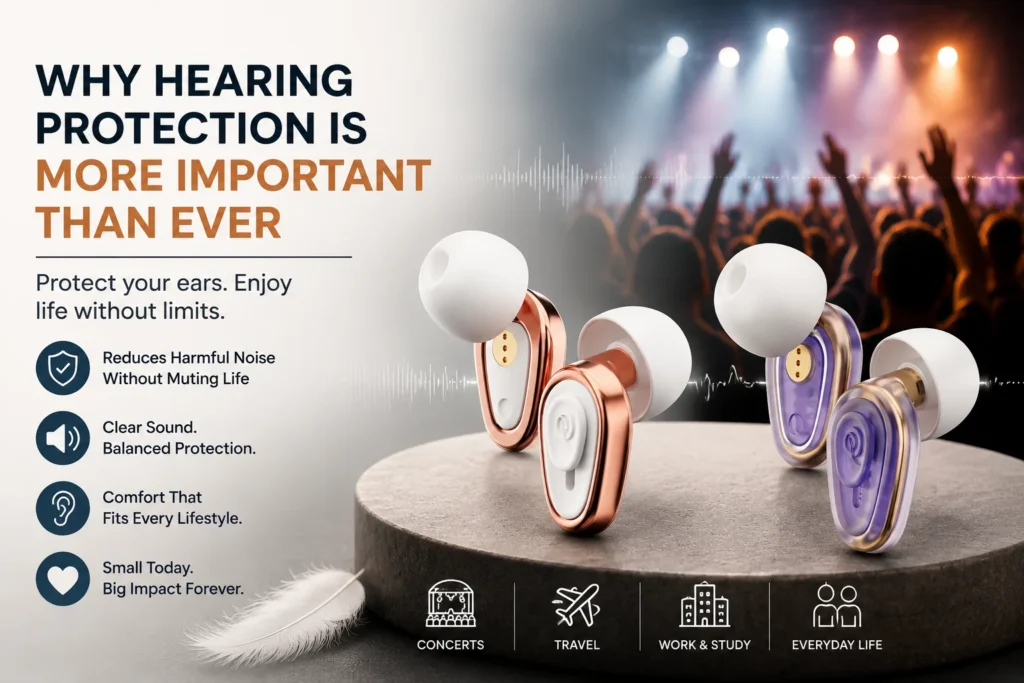
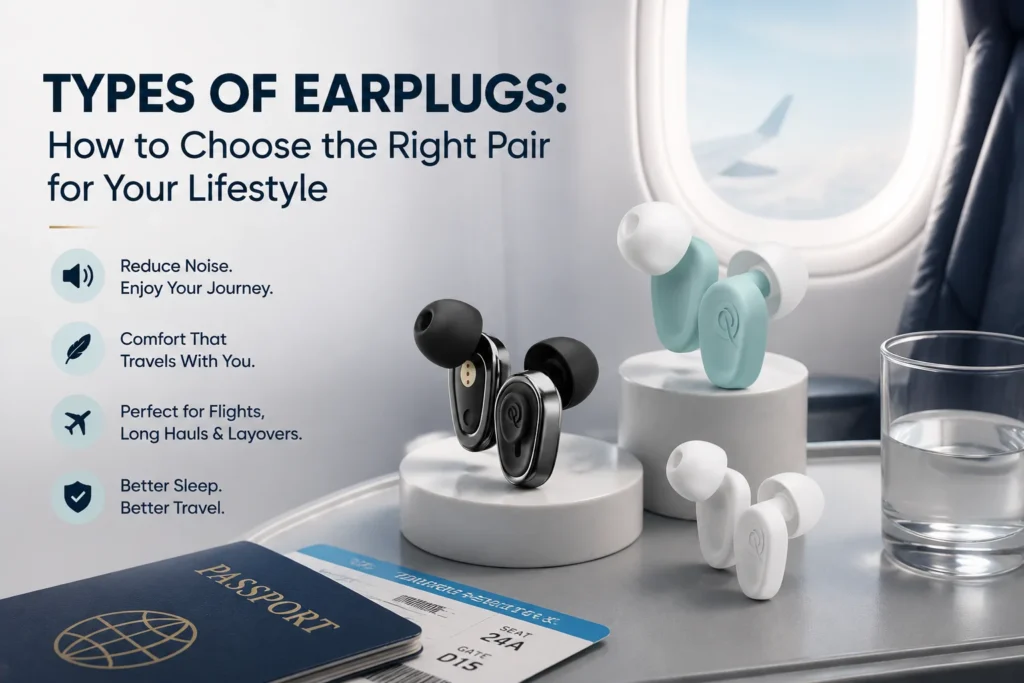
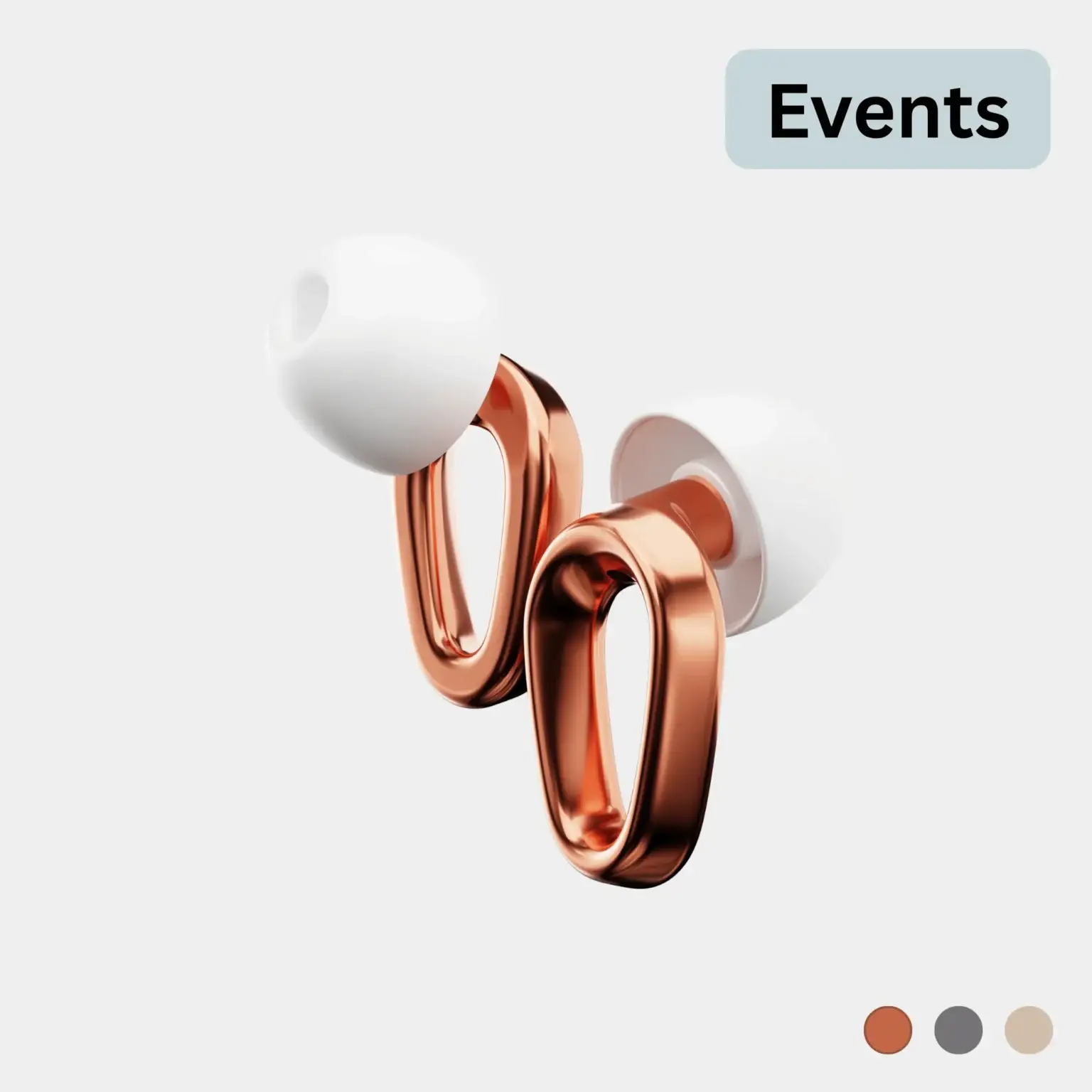
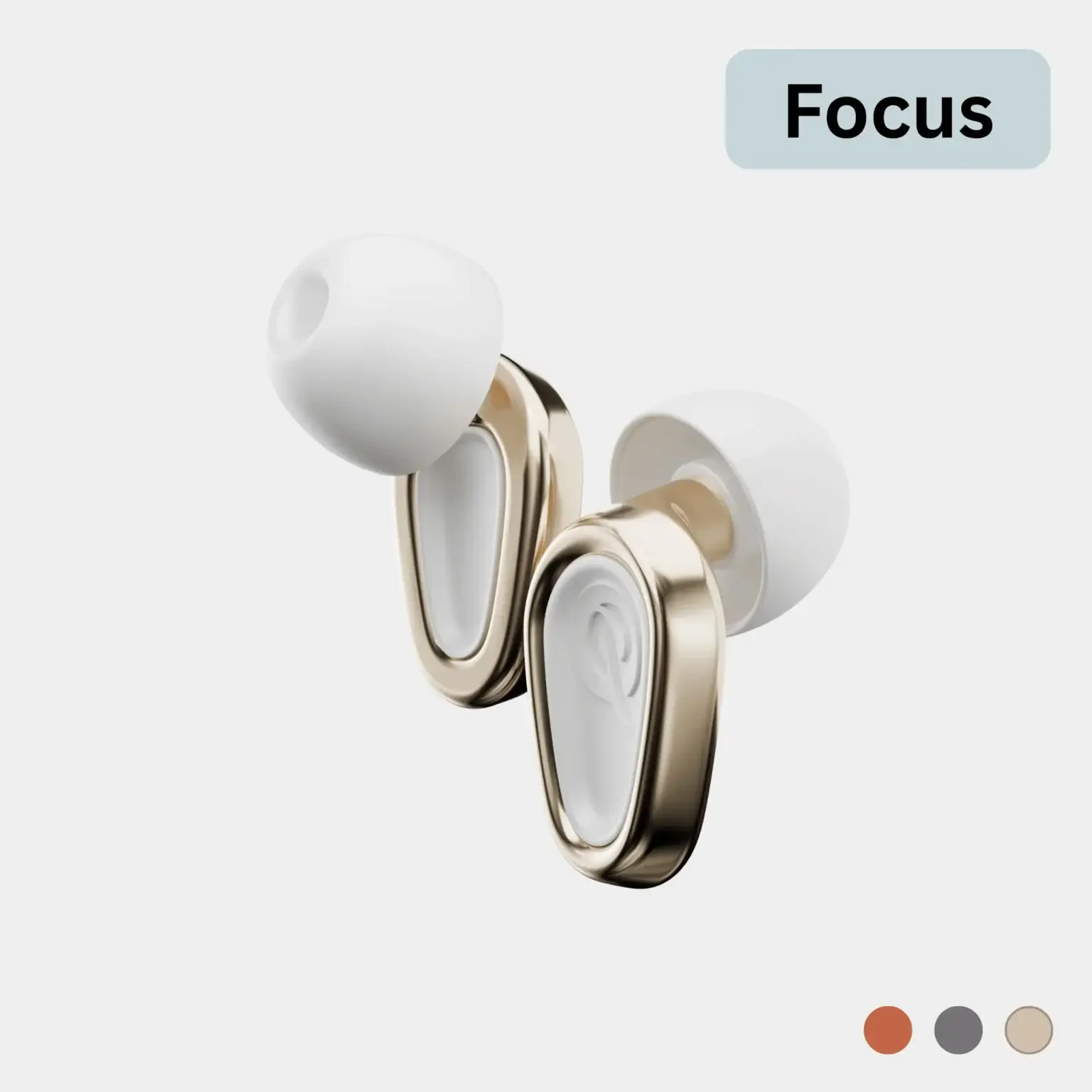
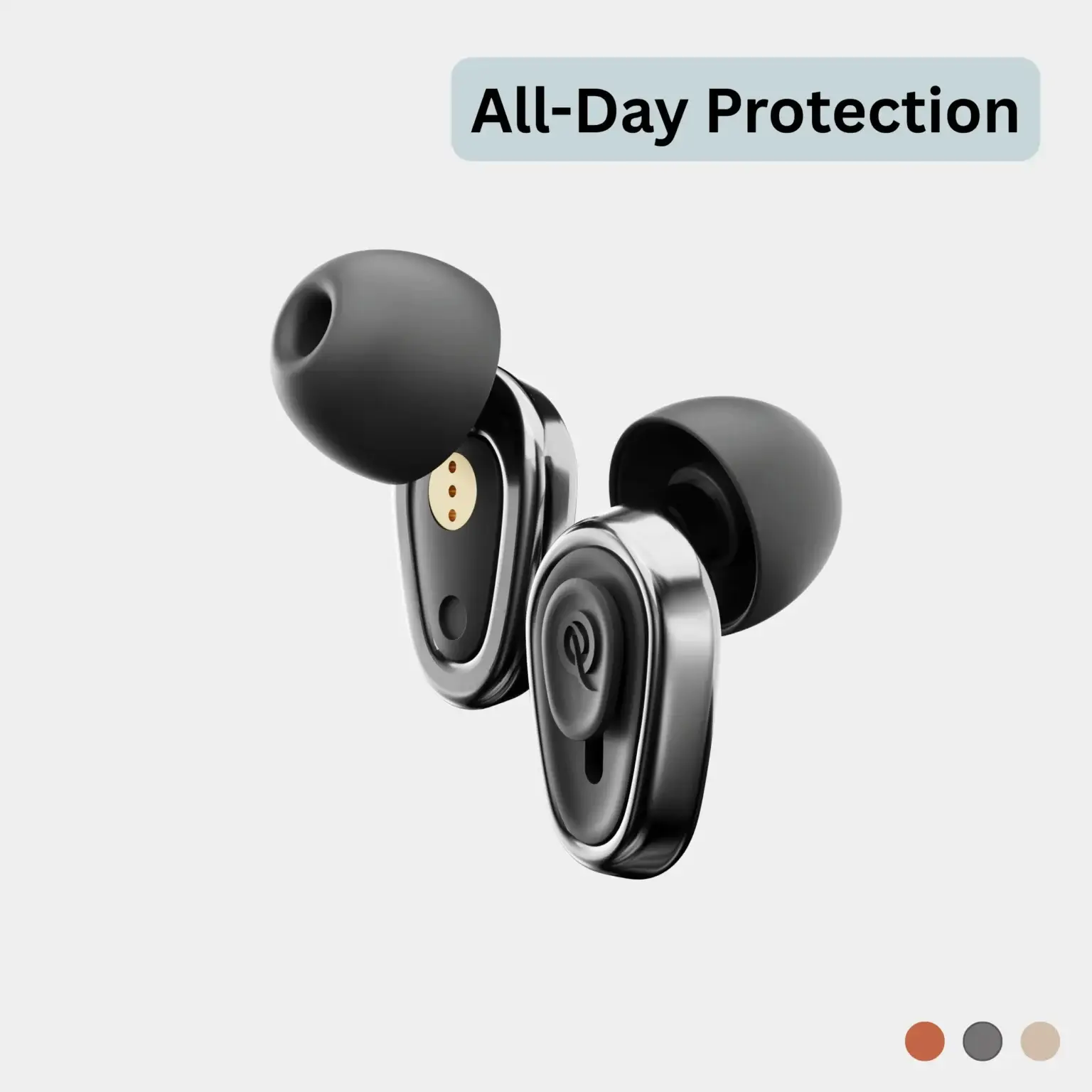
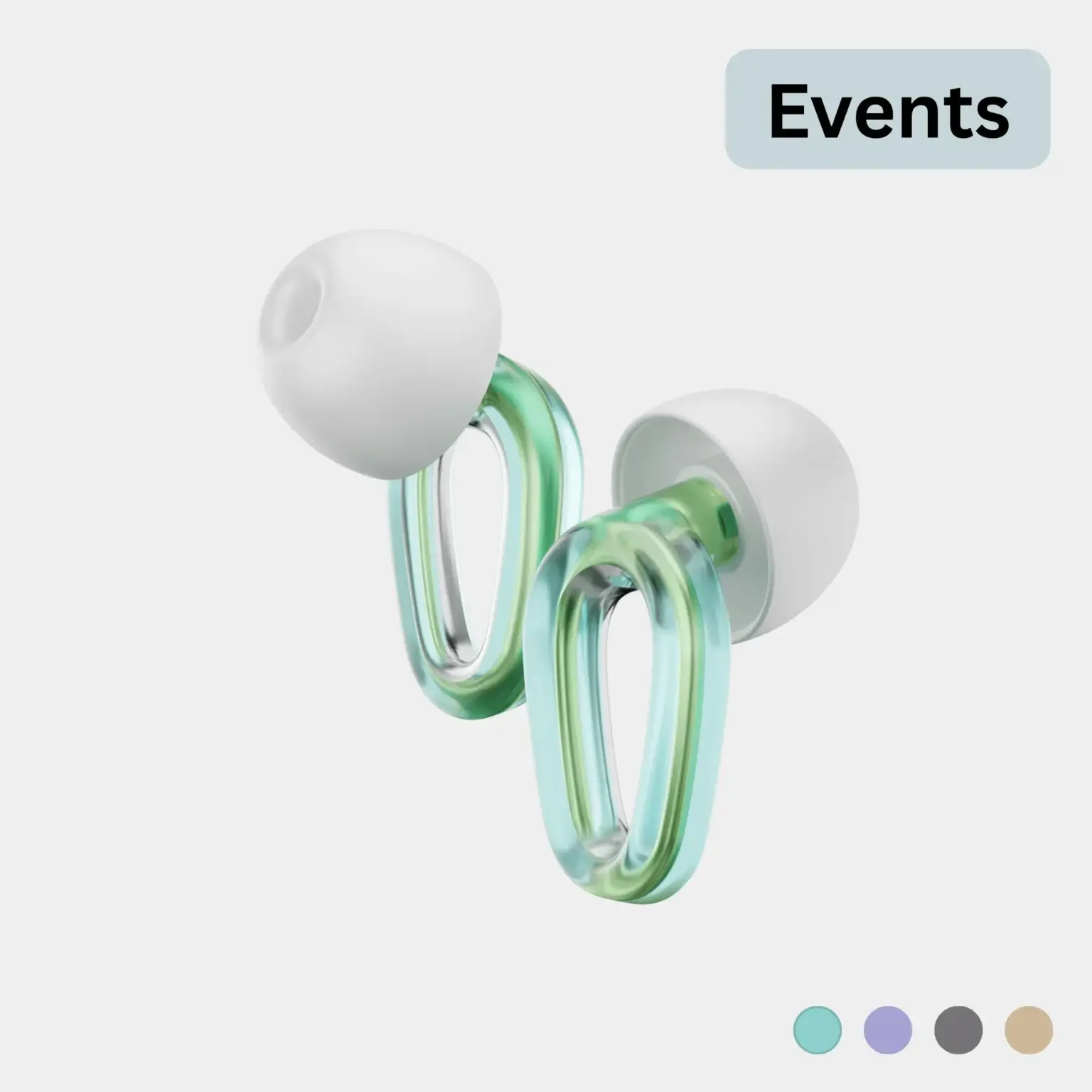
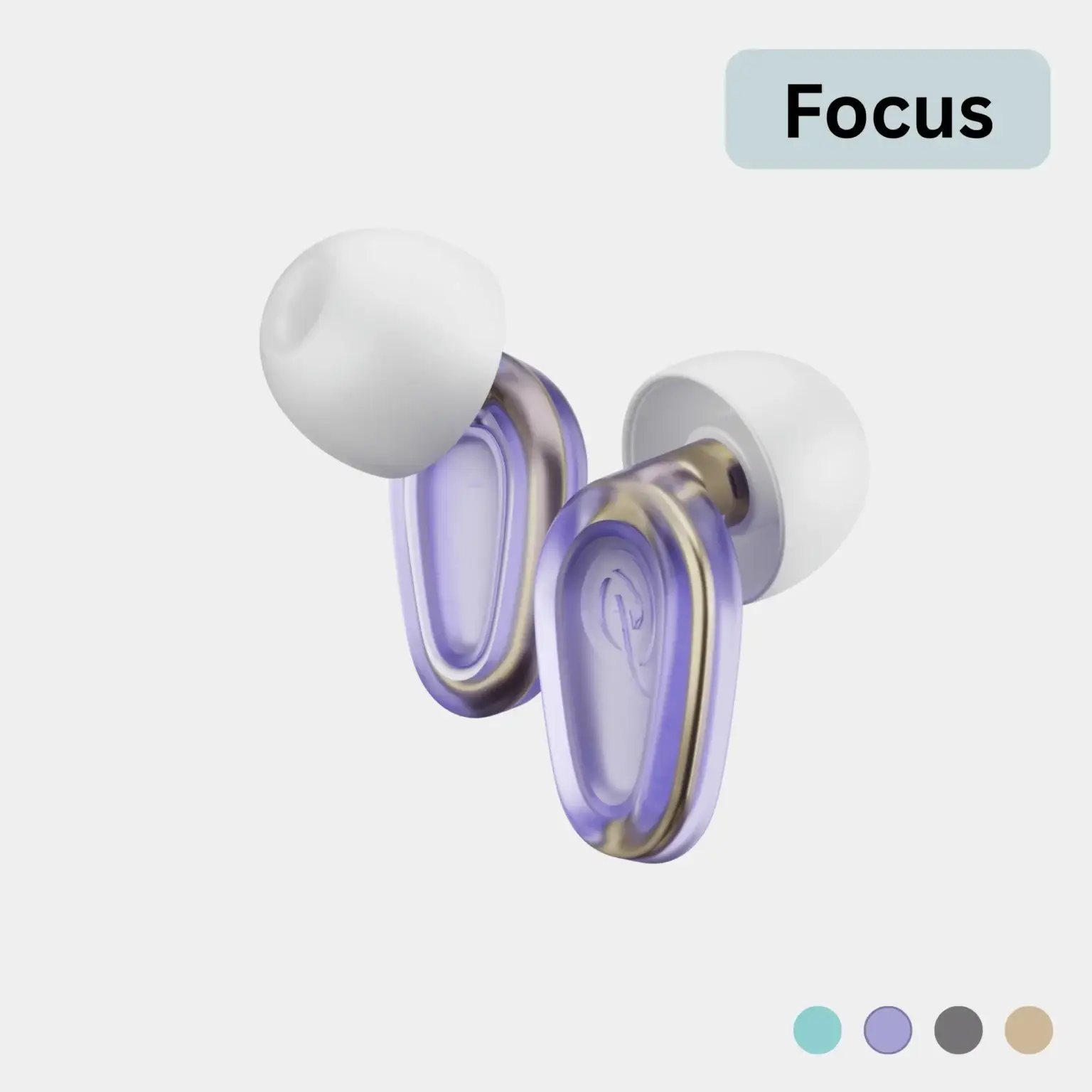
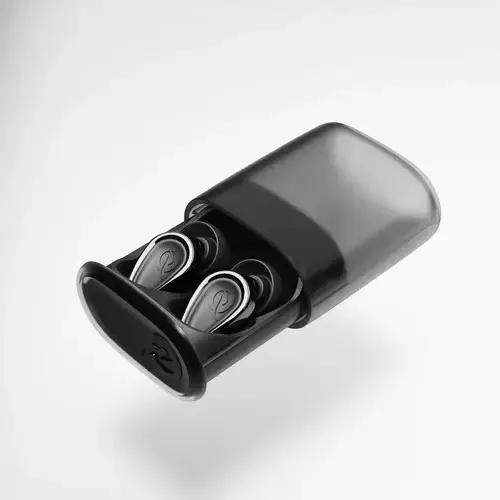
Reusable filtered earplugs can be particularly useful when you still want awareness of the world around you. They reduce the harshness of cabin noise without cutting you off completely. You may still hear an announcement, a travel companion or a crew member speaking nearby, although clarity will naturally be reduced.
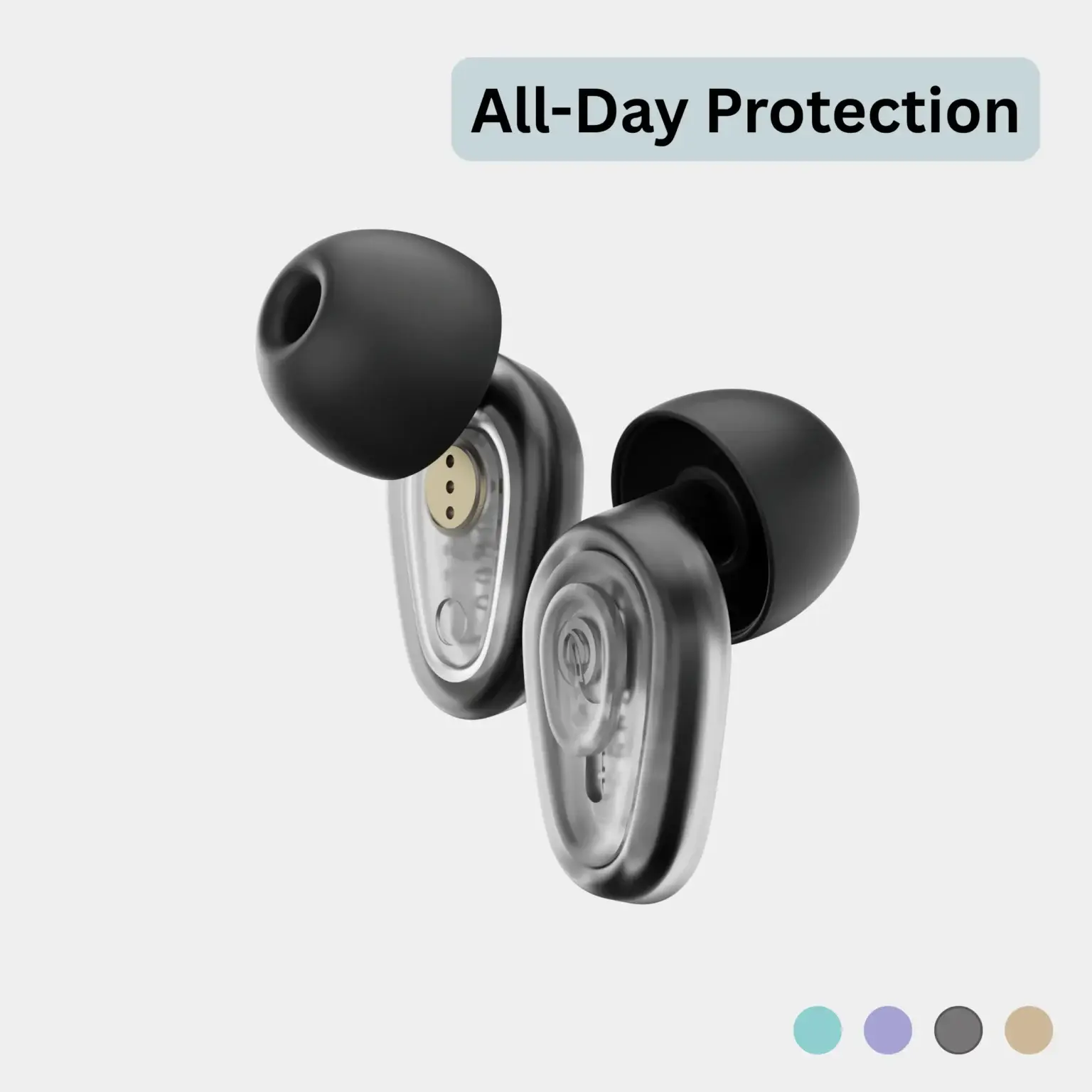
Foam earplugs usually provide stronger sound reduction when inserted correctly, but they can feel more isolating and take practice to fit. Low-profile reusable earplugs are often easier to take in and out, easier to keep clean and more comfortable for people who dislike the expanding feel of foam.
Choose the right fit before you fly
An earplug only works as intended when it fits securely and comfortably. Too loose, and it will not reduce much noise. Too tight or too deeply inserted, and it can create soreness, pressure or irritation that has nothing to do with the plane.
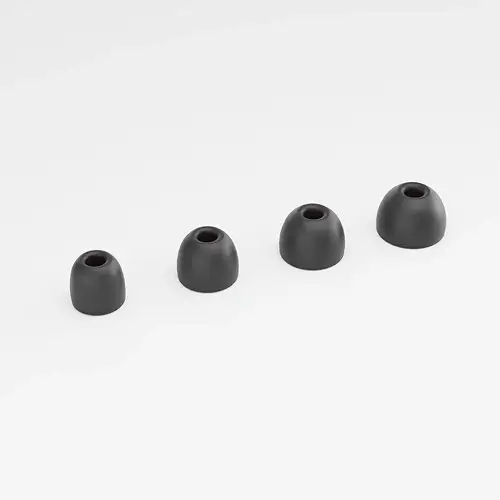
Try your earplugs at home before a travel day. Wear them while working, commuting or relaxing for an hour or two. If you notice sharp discomfort, persistent aching or a feeling that your ear is being forced open, switch to a smaller tip or a different style. Comfort is not a bonus feature. It is what makes hearing protection wearable enough to use.
For a reusable pair, clean hands matter. Check that the earplugs are free from wax, grit and damage before inserting them. Carry a protective case so they do not collect lint from the bottom of your bag. A clean, well-kept pair is more comfortable and more hygienic on repeat journeys.
If you use foam plugs, roll them into a narrow cylinder with clean fingers, place them gently and hold them in position while they expand. Do not push any earplug deep into the canal. The aim is a light seal, not a tight jam.
When to skip earplugs or ask for advice
Earplugs are generally simple travel kit, but there are occasions when it pays to be cautious. Avoid putting anything in your ear canal if you have an active ear infection, discharge, significant ear pain or a recent ear injury. The same caution applies after ear surgery unless your clinician has said earplugs are suitable.
If you have a perforated eardrum, grommets, chronic ear conditions or a history of severe barotrauma, ask a pharmacist, audiologist or GP what is appropriate before flying. The right choice may be standard earplugs, pressure-regulating flight plugs, medication for congestion, or a different approach altogether.
A heavy cold, sinus infection or severe allergy flare can also make equalising harder. Earplugs are not the cause, but they cannot solve blocked Eustachian tubes either. If your ears are already painful or fully blocked before departure, seek clinical advice where possible, particularly before a long-haul journey.
After landing, pain that is severe, worsening, accompanied by hearing loss, dizziness, bleeding or discharge needs medical attention. Do not keep inserting earplugs to mask a problem that needs checking.
Smart flying habits for comfortable ears
The most effective moment to help your ears is descent, when pressure discomfort is most common. Stay awake for the final 30 to 45 minutes if your ears tend to block. Swallow regularly, sip water, chew gum or suck a sweet. Young children often benefit from drinking during descent because the swallowing action helps equalisation.
If you wear standard earplugs, test what feels best for you. Many people are happy to leave them in. Others prefer to remove them shortly before descent, then put them back in once the pressure has settled. There is no prize for keeping them in if they make you focus more on your ears than your journey.
Keep your entertainment volume sensible, too. Earplugs can reduce the temptation to turn headphones up against engine noise, but noise-cancelling headphones or earbuds can be a better choice if you need to hear a film clearly. The strongest set-up for many travellers is earplugs for rest, then headphones at a moderate level when listening.
Don’t lose awareness completely
Reduced noise is useful. Missing essential information is not. Before take-off, listen to the safety briefing or read the safety card. Keep announcements in mind, especially during delays, gate changes or disruption. If you are travelling alone, let cabin crew know if you have a hearing-related need rather than relying on chance.
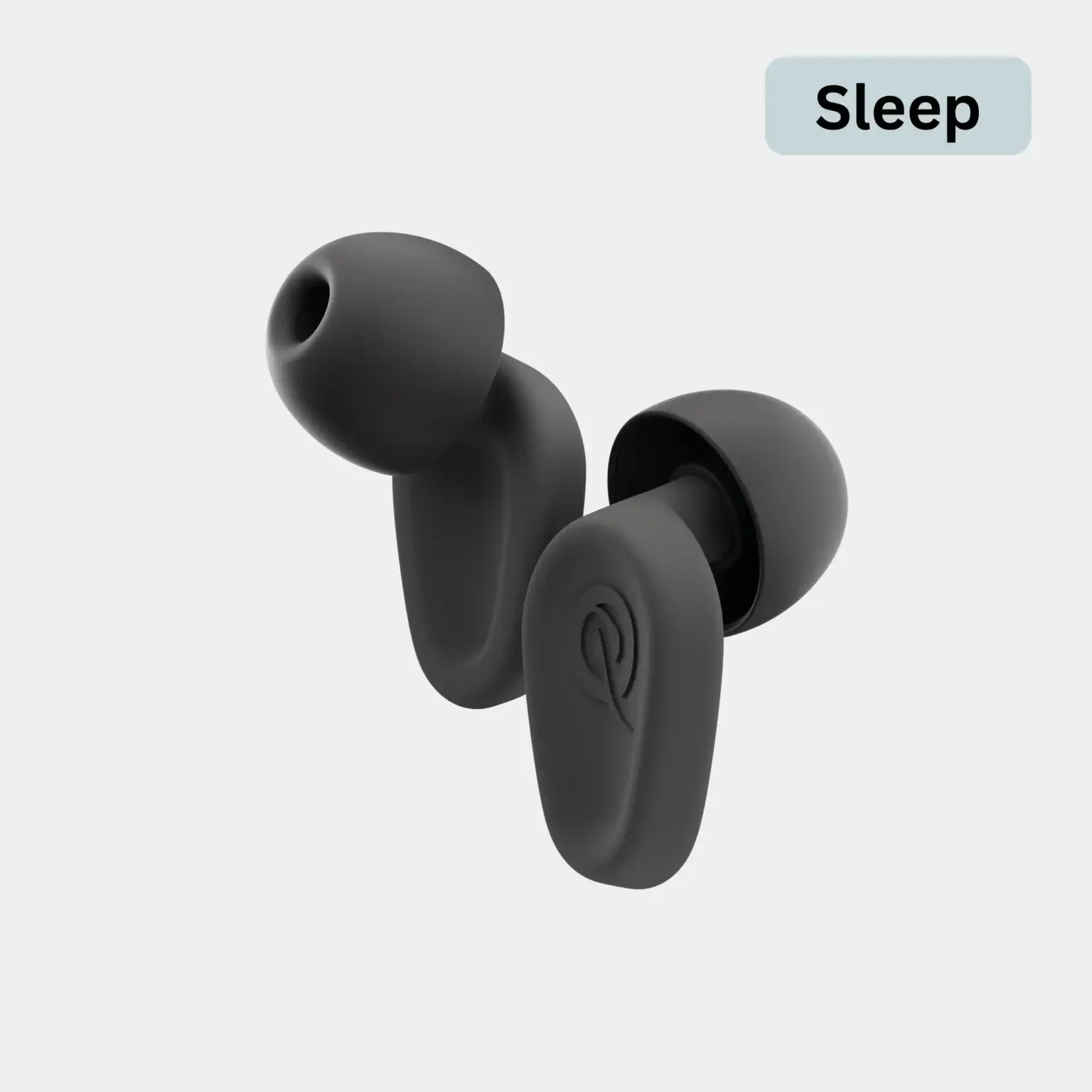
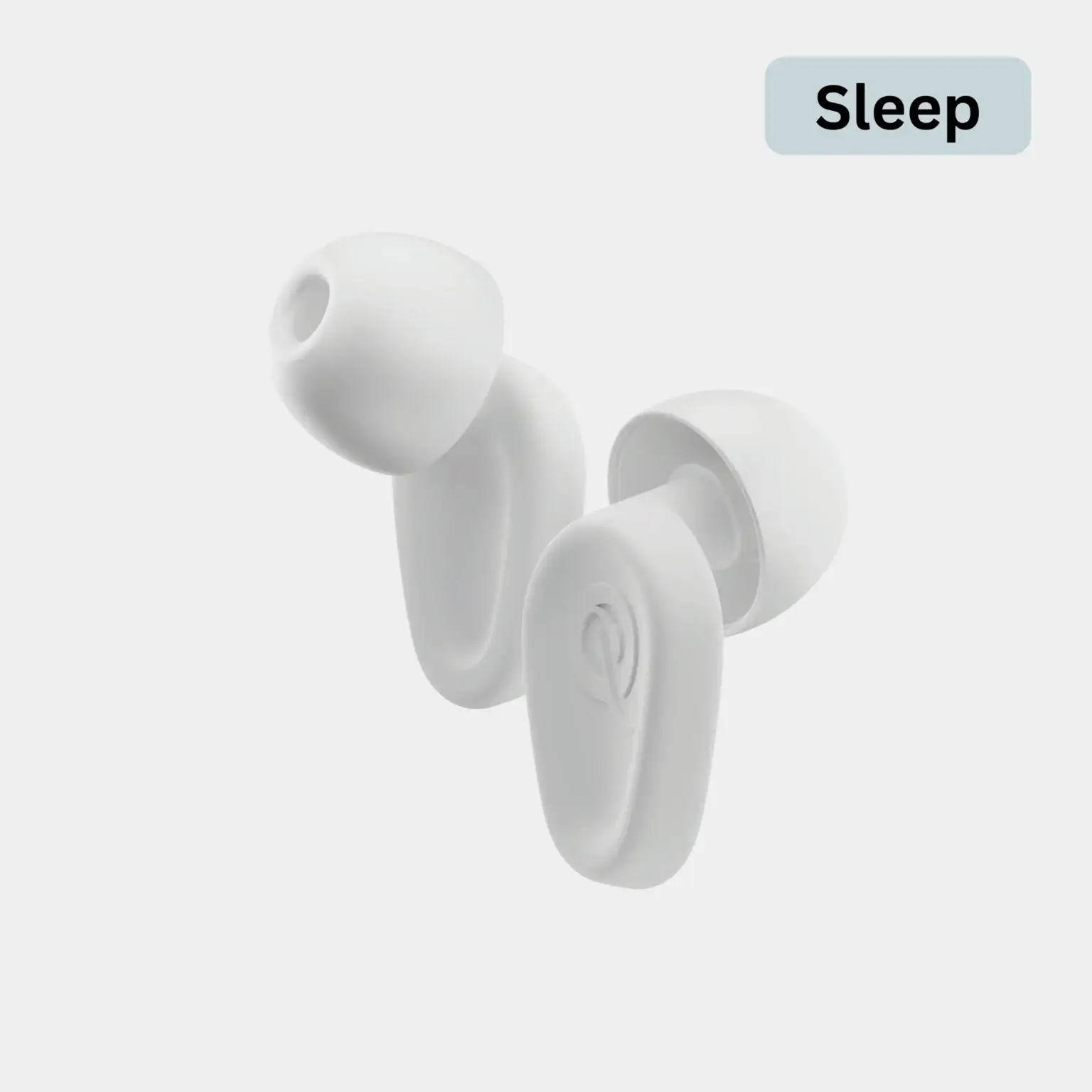
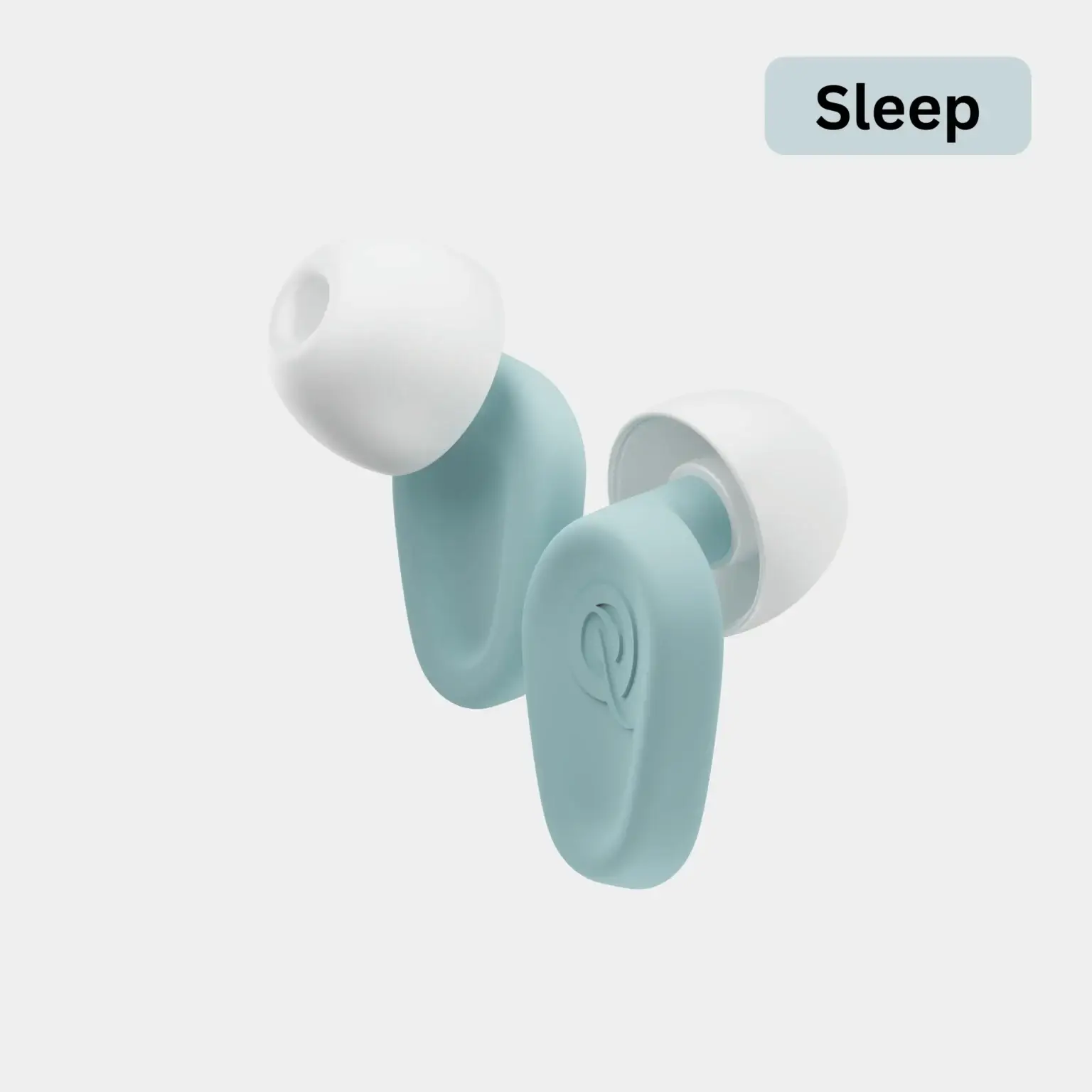
For sleeping, earplugs are often a practical choice, but fit matters even more when your head is against a window or travel pillow. A low-profile design is less likely to press uncomfortably into the ear. Earmuffz reusable earplugs are built around that everyday comfort principle: controlled noise reduction without bulky gear getting in the way of the moment.
Pack ear protection like you pack your passport
The best earplugs for a flight are the pair you will actually wear correctly. For maximum hush, a well-fitted foam option may suit you. For repeat travel, easier handling and a more natural sense of awareness, reusable filtered earplugs may be the better companion. If pressure changes are your main problem, choose a product made specifically for flying.
Flying does not have to mean surrendering your ears to engine roar, overstimulation and a noisy cabin. Bring the right fit, use it with care, and give yourself permission to turn the volume down. Arriving calmer is a better way to travel.