
A packed train platform, a ringing concert venue, a snoring partner, an open-plan office that will not quiet down. Noise is not one problem, so one type of earplug cannot be the right answer every time. The choice between passive versus filtered earplugs comes down to what you want from the sound around you: less of it altogether, or a more manageable version of it.
Both can support hearing comfort and help reduce exposure to loud environments. But they create very different experiences. Choose well and you stay comfortable, focused and in control. Choose poorly and you may either hear too much or feel cut off when you need awareness.
What passive earplugs do
Passive earplugs reduce sound by physically blocking the ear canal. Foam plugs are the familiar example: roll them down, insert them correctly and let the material expand to form a seal. Silicone, wax and some reusable plugs use the same basic principle, though their shape and materials differ.
They do not need batteries, electronics or moving parts. Their job is simple: create a barrier between your ears and incoming sound. In general, the more complete the seal, the greater the reduction you can expect.
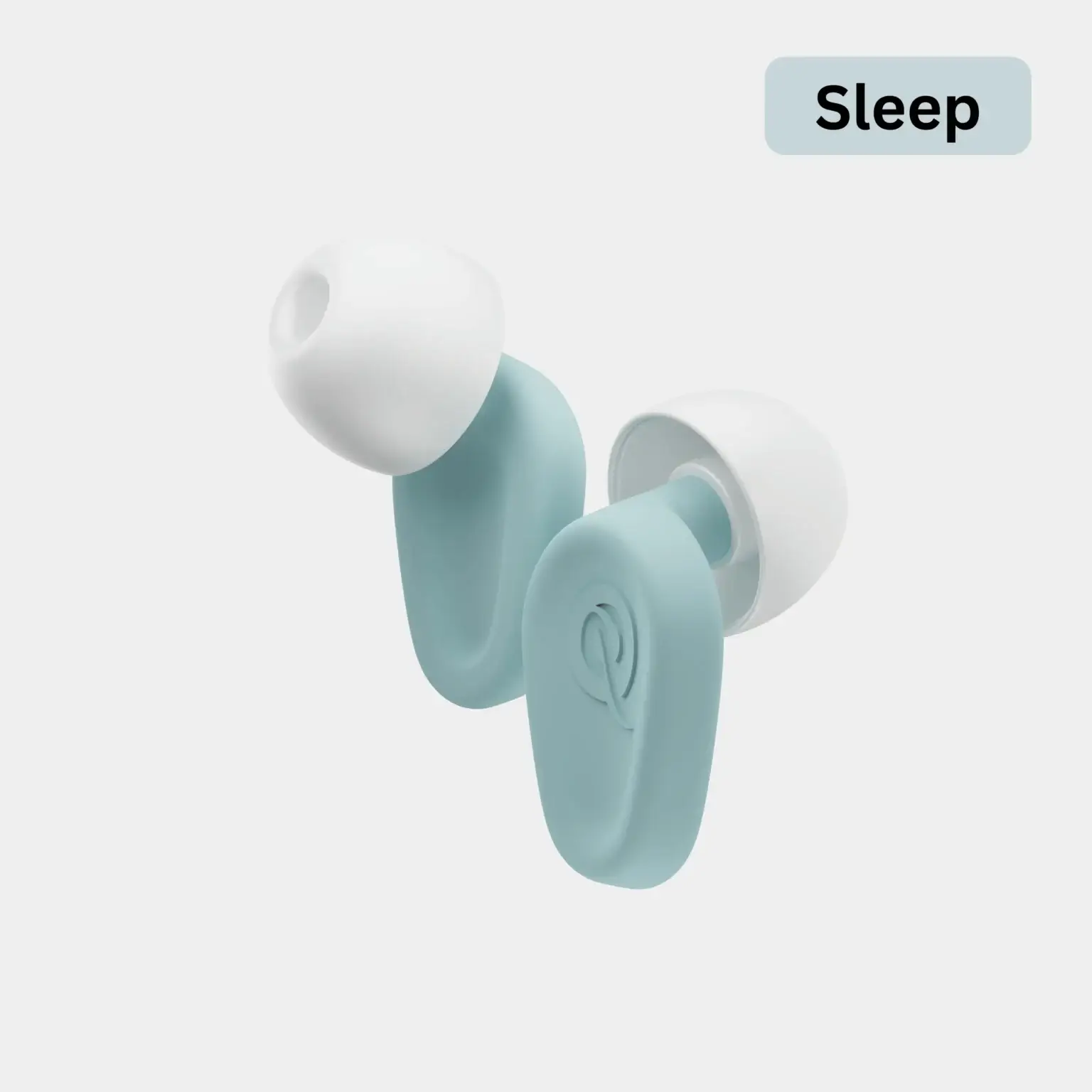
That makes passive earplugs a strong choice when your priority is maximum quiet rather than conversation or sound quality. Sleep is the clearest example. If outside traffic, household noise or a partner’s snoring is keeping you awake, you are unlikely to need to preserve the detail of those sounds. You want the volume turned down.
Passive plugs also make sense for loud, predictable situations where communication is limited. Think DIY tasks, certain workshop jobs, resting during a flight, or recovering after a particularly noisy day. Soft, low-profile reusable options can be more comfortable than disposable foam for regular use, especially when you sleep on your side.
There is a trade-off. Because passive plugs reduce sound broadly, speech can become muffled, alarms may be harder to hear and your own voice may sound louder inside your head. That effect, known as occlusion, is common when the ear canal is sealed. It is not necessarily a fault – it is part of what a strong seal does.
How filtered earplugs change the experience
Filtered earplugs are designed to lower sound more evenly across frequencies. Instead of simply blocking as much as possible, they use an acoustic channel or filter to reduce the overall intensity while aiming to preserve a more natural balance.
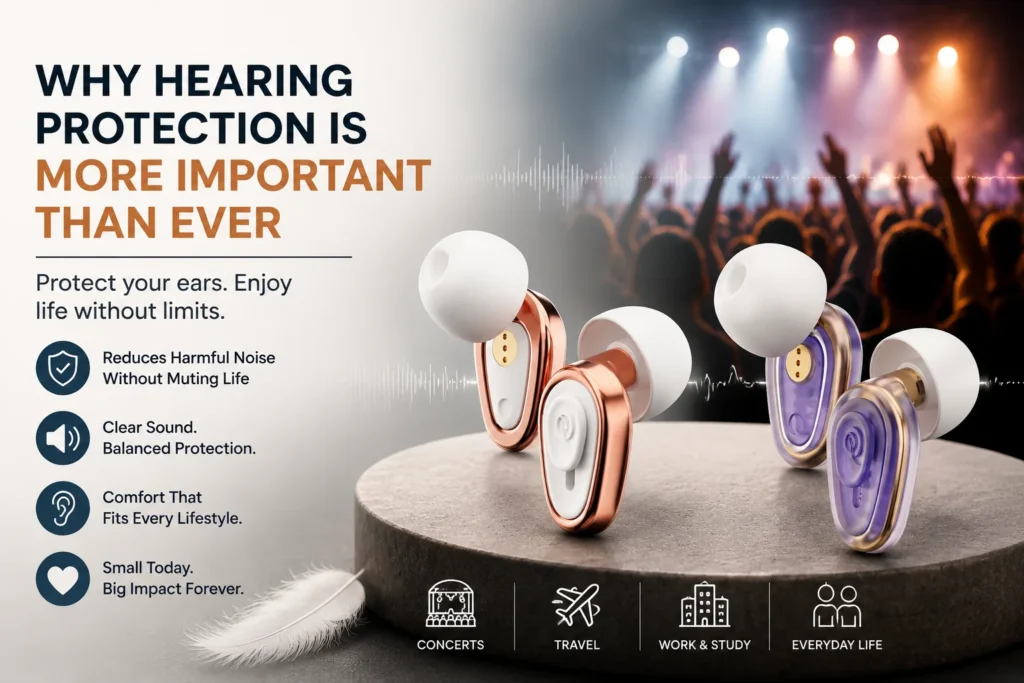
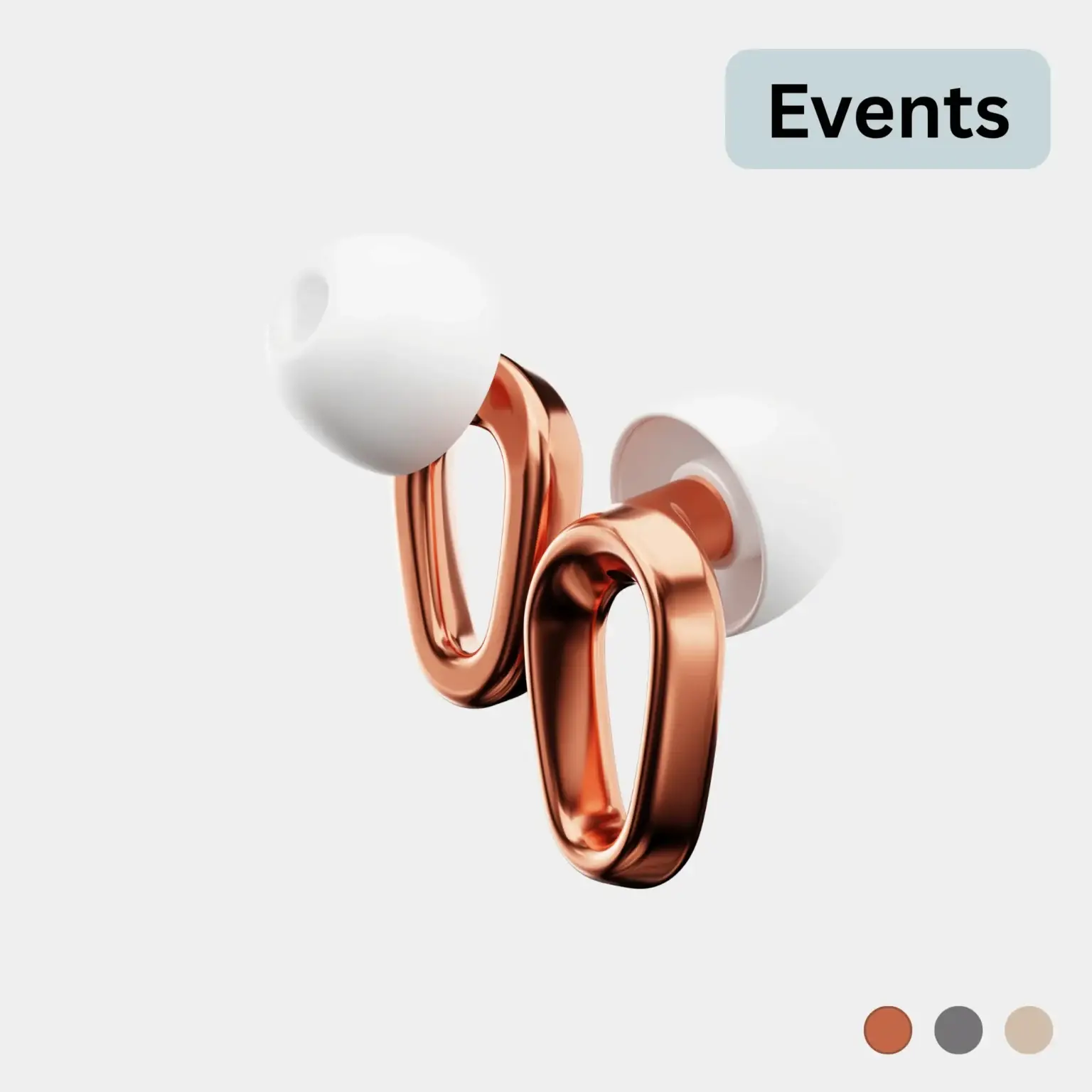
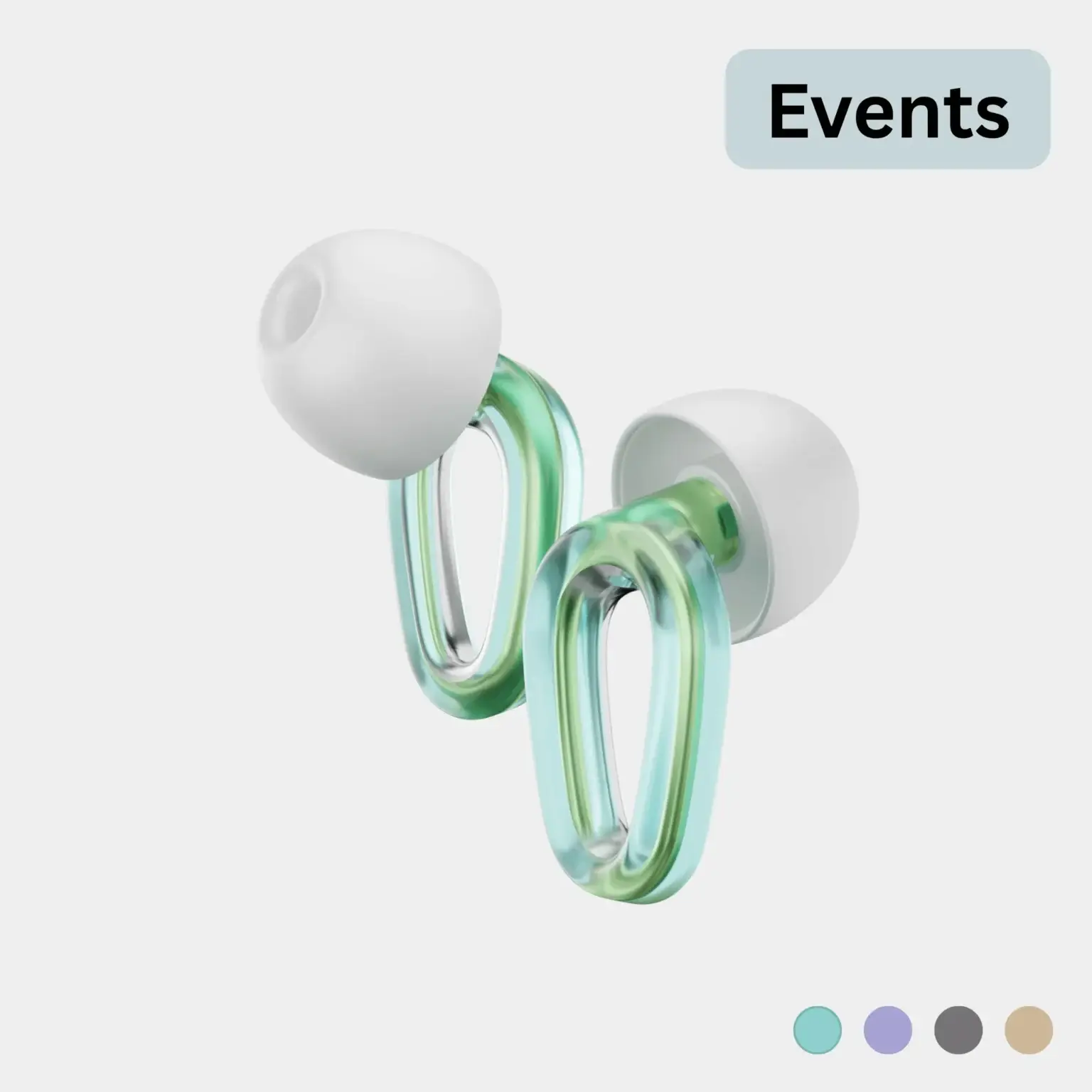
That matters when you need protection without disappearing from the moment. At a gig, for example, the goal is not silence. You still want to hear the music, follow the rhythm and speak to friends between sets. A well-designed filtered plug can take the sharp edge off volume while helping music remain clearer than it would through a heavily sealed foam plug.
The same logic applies to commuting, busy cafés, shared workspaces and city streets. You can soften the sensory load without making the world feel distant. For many people with noise sensitivity, that difference makes reusable filtered earplugs easier to wear for longer.
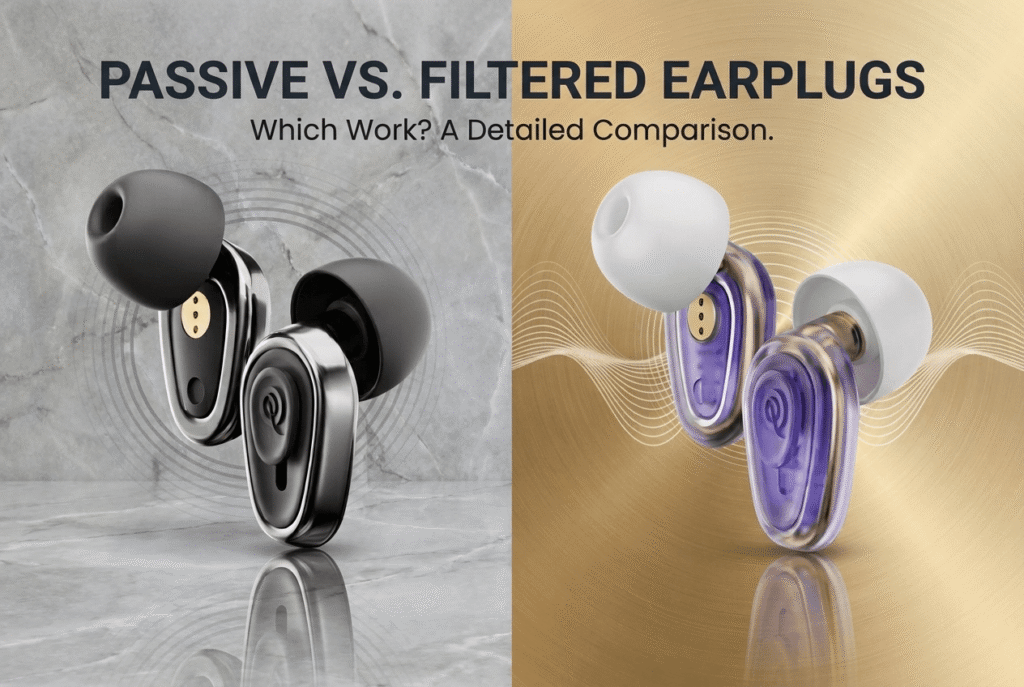
A useful technical point: filtered earplugs are still usually passive in the engineering sense. They do not actively create opposing sound waves like noise-cancelling headphones. When people compare passive versus filtered earplugs, they normally mean standard, full-blocking plugs versus passive plugs with an acoustic filter. The distinction is about how sound is reduced, not whether the plug uses power.
Passive versus filtered earplugs for real life
The best option depends on the environment, the volume and how much awareness you need to keep. Noise reduction is not a competition for the biggest number. It is about getting the right level of control for the task.
Sleep and deep rest
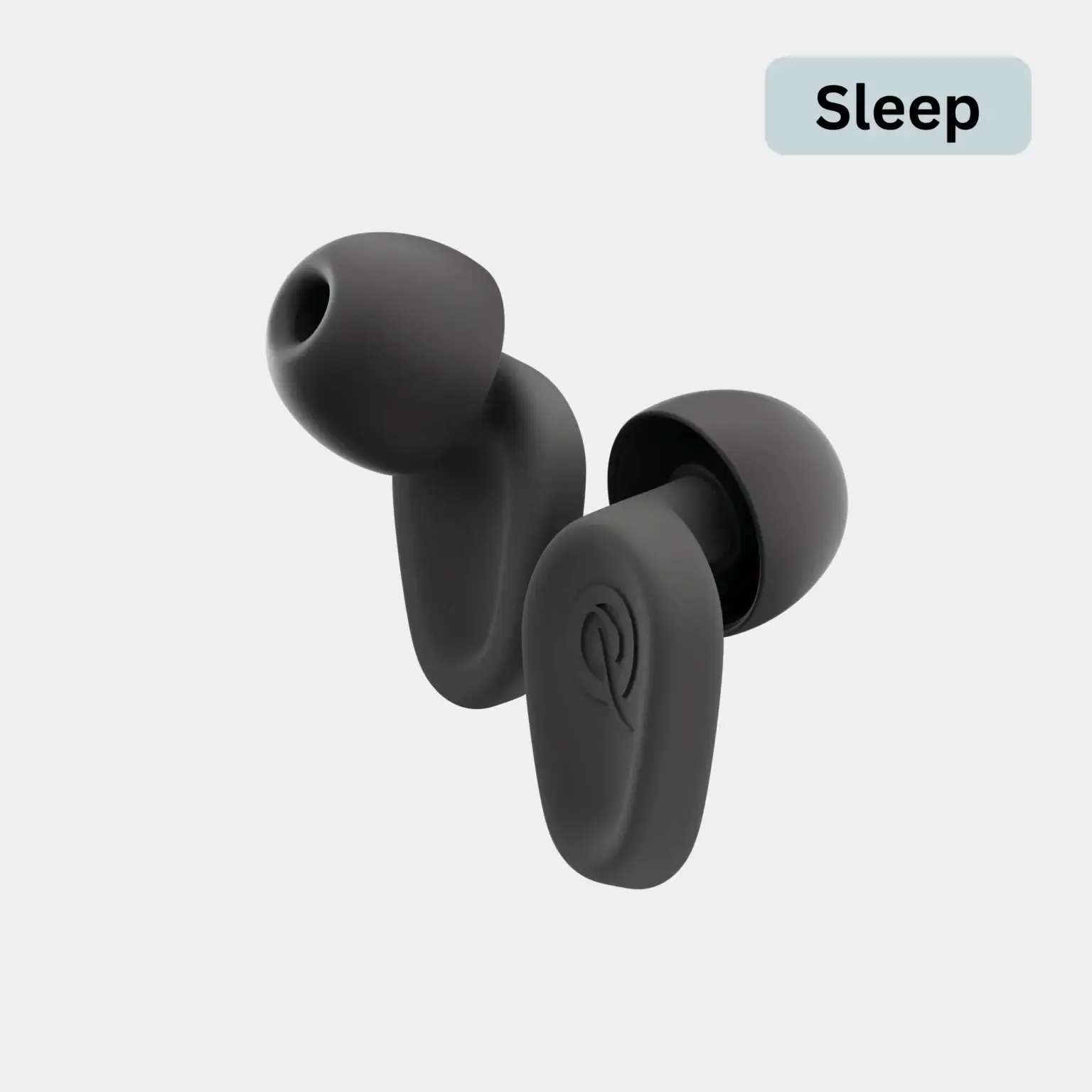
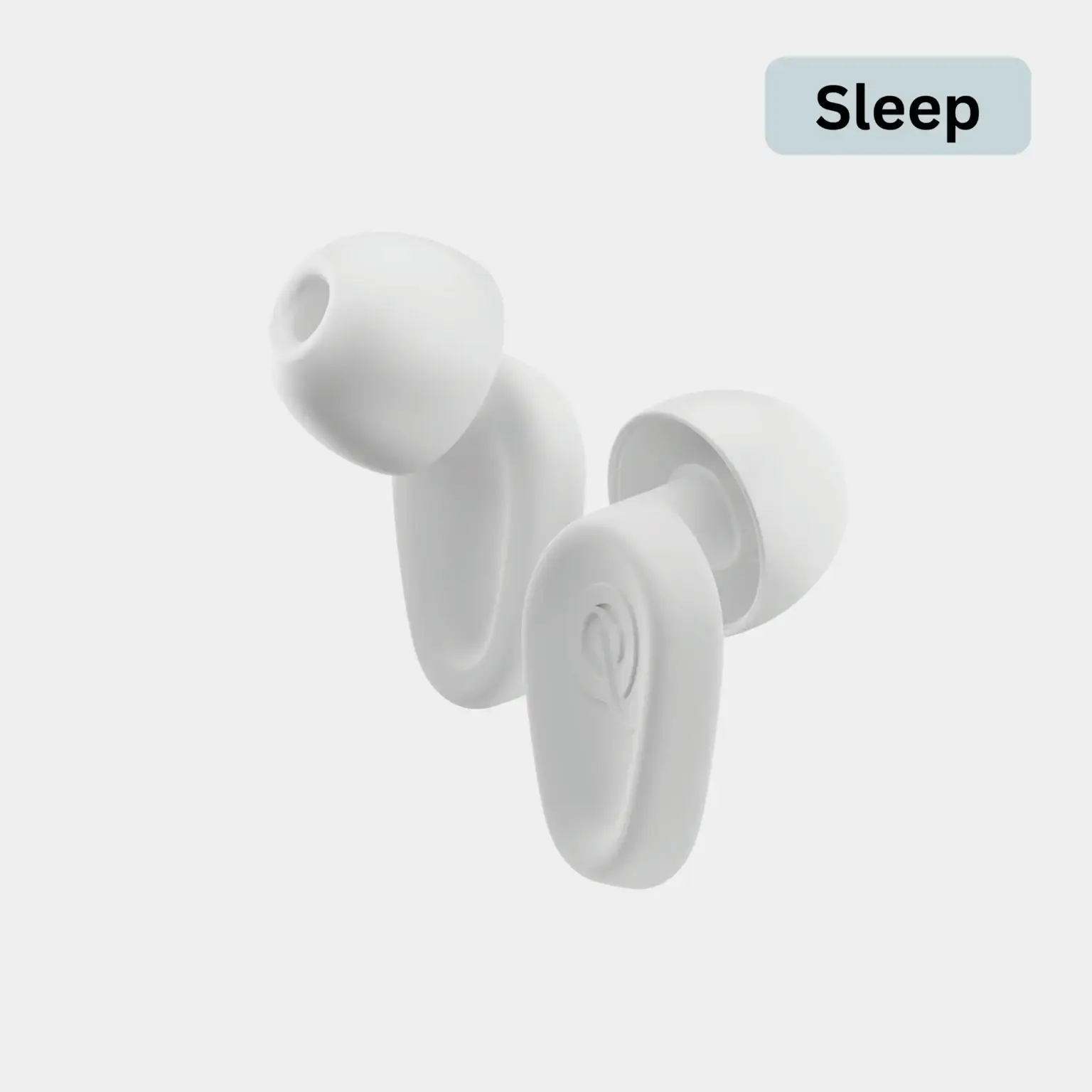
For sleep, passive earplugs are usually the better fit. A comfortable, soft plug with a reliable seal can reduce disruptive noise consistently through the night. Look for a low-profile shape if you sleep on your side, and take fit seriously. A plug that presses into your ear or falls out at 3 am will not support better rest.
Filtered earplugs can work for light noise or for people who need to remain more aware of a baby, alarm or household activity. Still, if snoring or road noise is the main problem, the stronger broad reduction of a sleep-focused passive design is often more useful.
Concerts, festivals and nightlife
Filtered earplugs shine when the sound itself is part of the experience. They are built for keeping the energy while reducing the punishing volume that can leave your ears ringing afterwards. Music may not sound identical to listening without plugs, but quality filters aim to avoid the dull, underwater effect associated with basic foam plugs.
For extremely loud venues, your position matters too. Standing directly beside a speaker stack is a different exposure from sitting at the back of a theatre. Earplugs are a smart layer of protection, not a reason to ignore painfully loud sound or stay in it for longer than feels safe.
Focus, commuting and everyday overstimulation
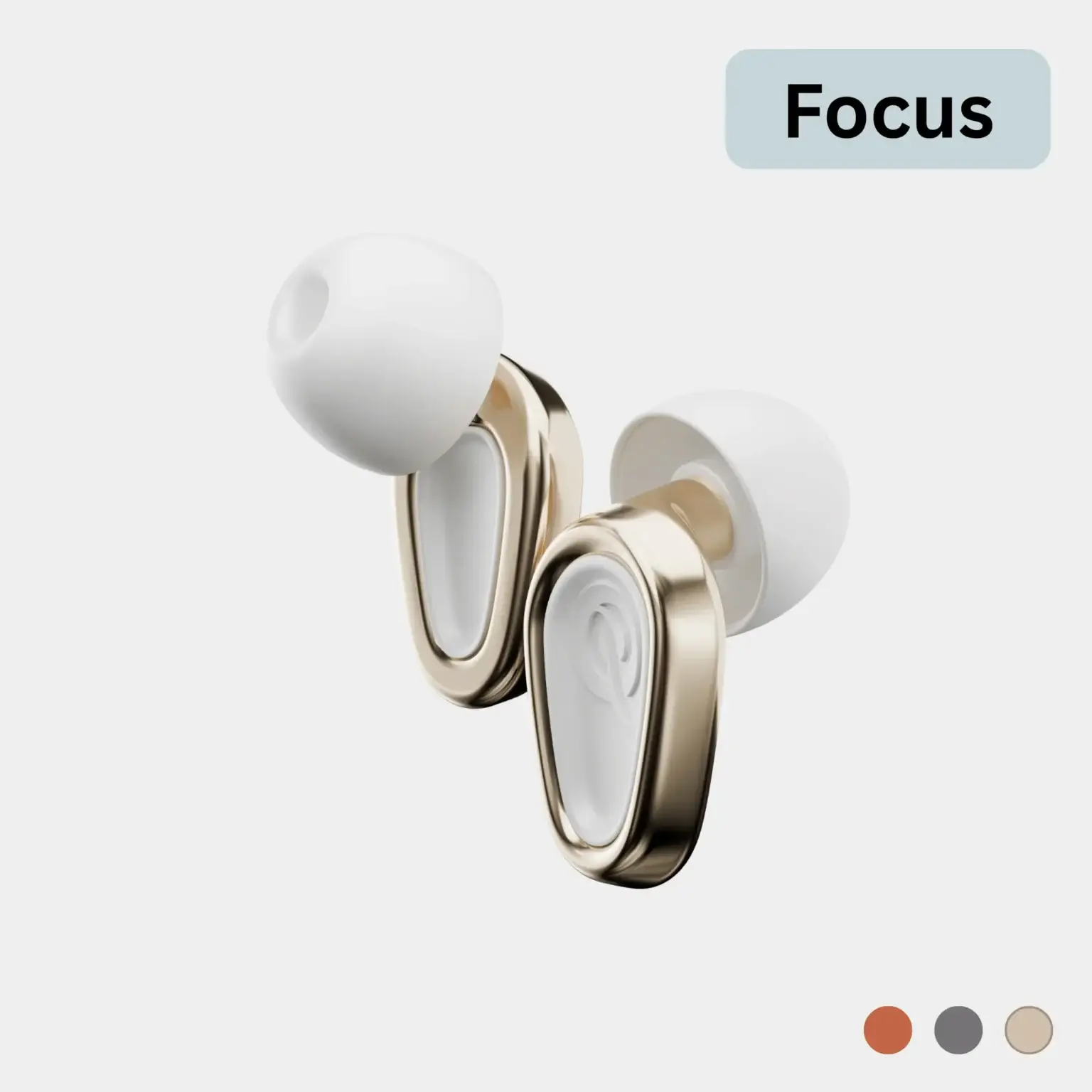
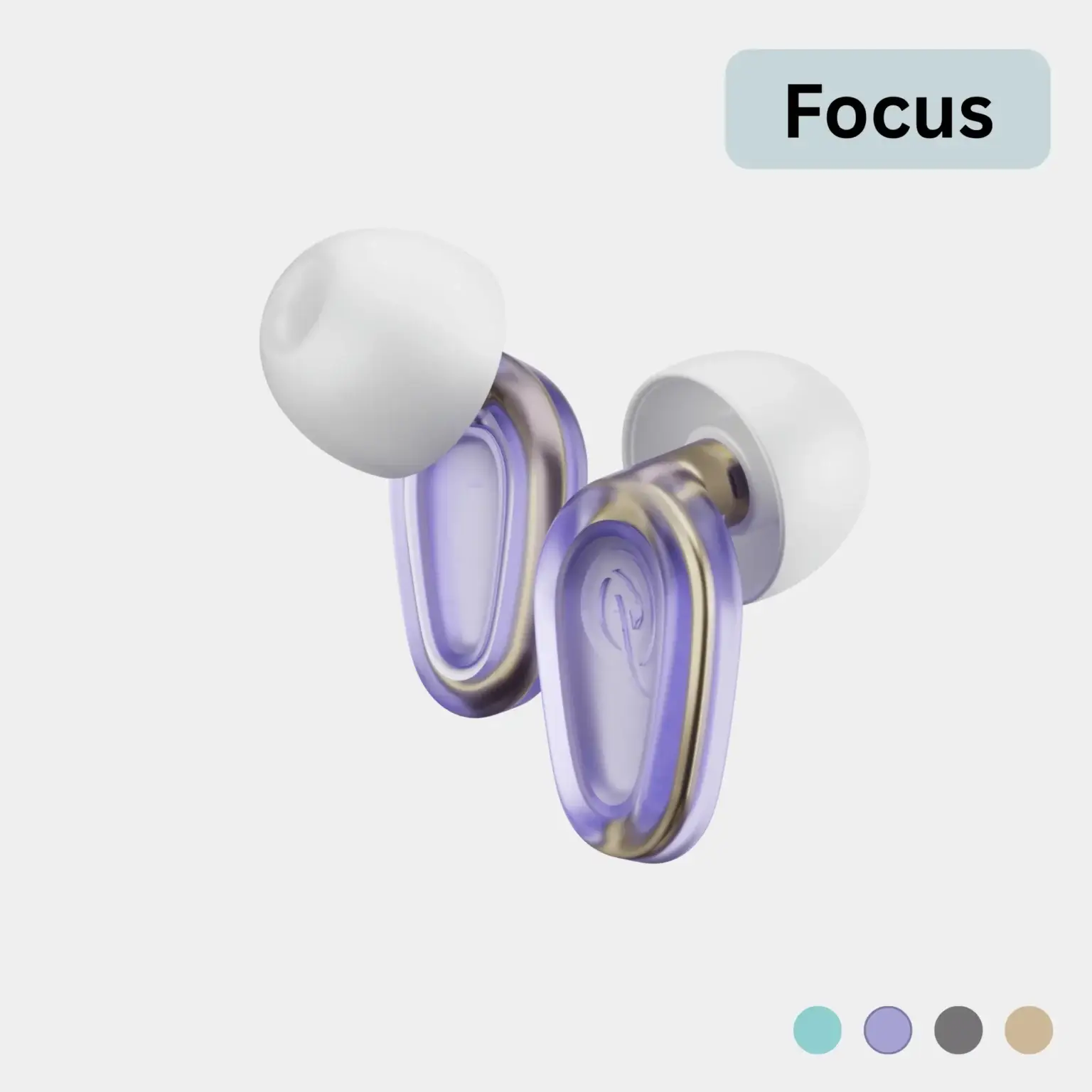
This is where personal preference matters most. A passive plug can be excellent when you need to disappear into concentrated work, take a quiet break on public transport or reduce relentless household sound. If your day includes meetings, colleagues, announcements or crossing busy roads, filtered earplugs are often more practical.
The goal is not to block life out. It is to lower the pressure. A filter can make an office feel less intrusive while keeping conversation available. On a commute, it can take the edge off the rumble without removing useful awareness of your surroundings.
Motorcycling, sport and travel
Wind noise on a motorbike can be tiring as well as loud, particularly on longer rides. Many riders prefer filtered options because they can reduce harsh wind noise while retaining more useful sound from the bike and road environment. Fit beneath a helmet is essential, so a low-profile design matters as much as the filter itself.
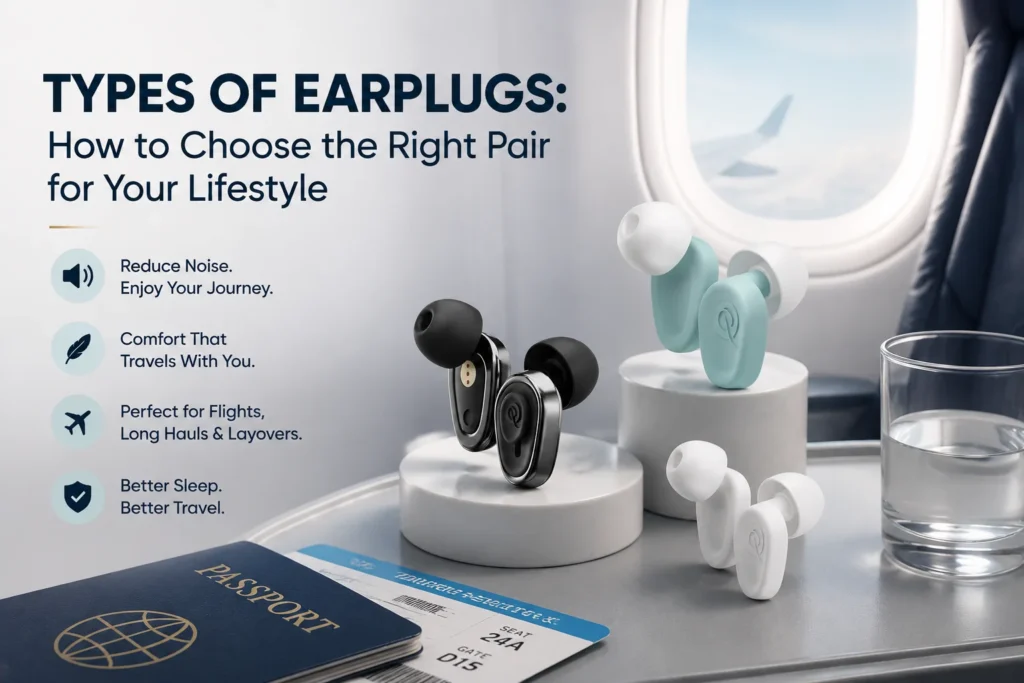
For flights, passive plugs may offer the more restful experience if you plan to sleep. For navigating airports, hearing announcements and speaking with cabin crew, filtered plugs can be the better companion. Some travellers keep both types on hand rather than forcing one plug to cover every part of the journey.
The number on the box is not the whole story
Noise reduction ratings are helpful, but they are not a promise that every wearer will receive exactly the same result. Ear canal shape, insertion depth, eartip size and movement all affect performance. A highly rated plug with a poor seal can underperform a lower-rated plug that fits you properly.
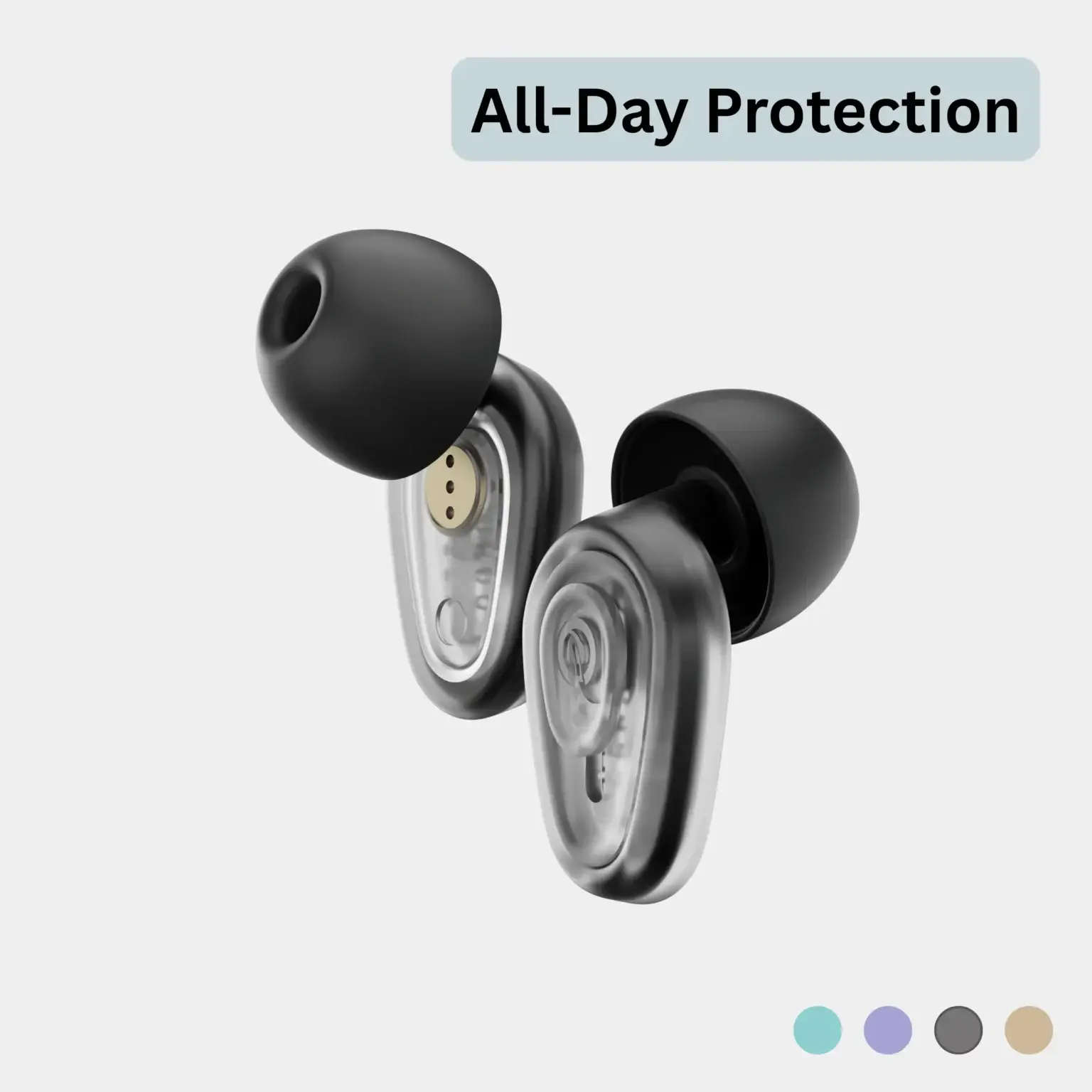
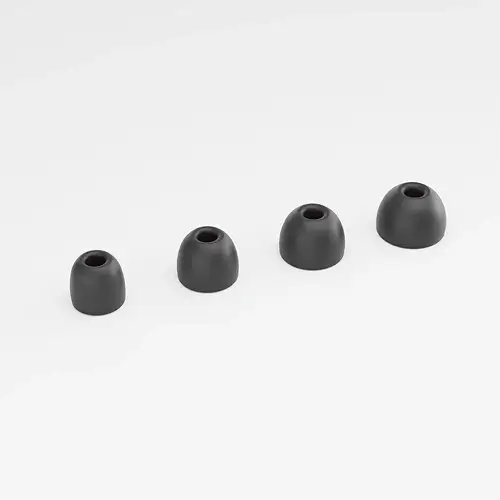
For reusable earplugs, different eartip sizes are more than a nice extra. They are how you tune comfort and seal. The right tip should sit securely without pressure, pain or a constant urge to readjust it. If you can feel a plug working all day, you are less likely to wear it when it counts.
Certification also provides useful reassurance, especially when you are choosing protection for genuinely loud environments. Look for products tested to relevant standards, such as CE, EN 352 or ANSI where applicable. Then read what the rating is intended to represent and use the plug for the scenario it was designed for.
Do not confuse filtering with active noise cancelling
Active noise-cancelling headphones use microphones and electronics to counter certain sounds, often low, steady noise such as engine hum. They can make a train or plane feel calmer, but they are not automatically hearing protection. Their protective ability depends on the product, its fit and whether it is specifically rated for that purpose.
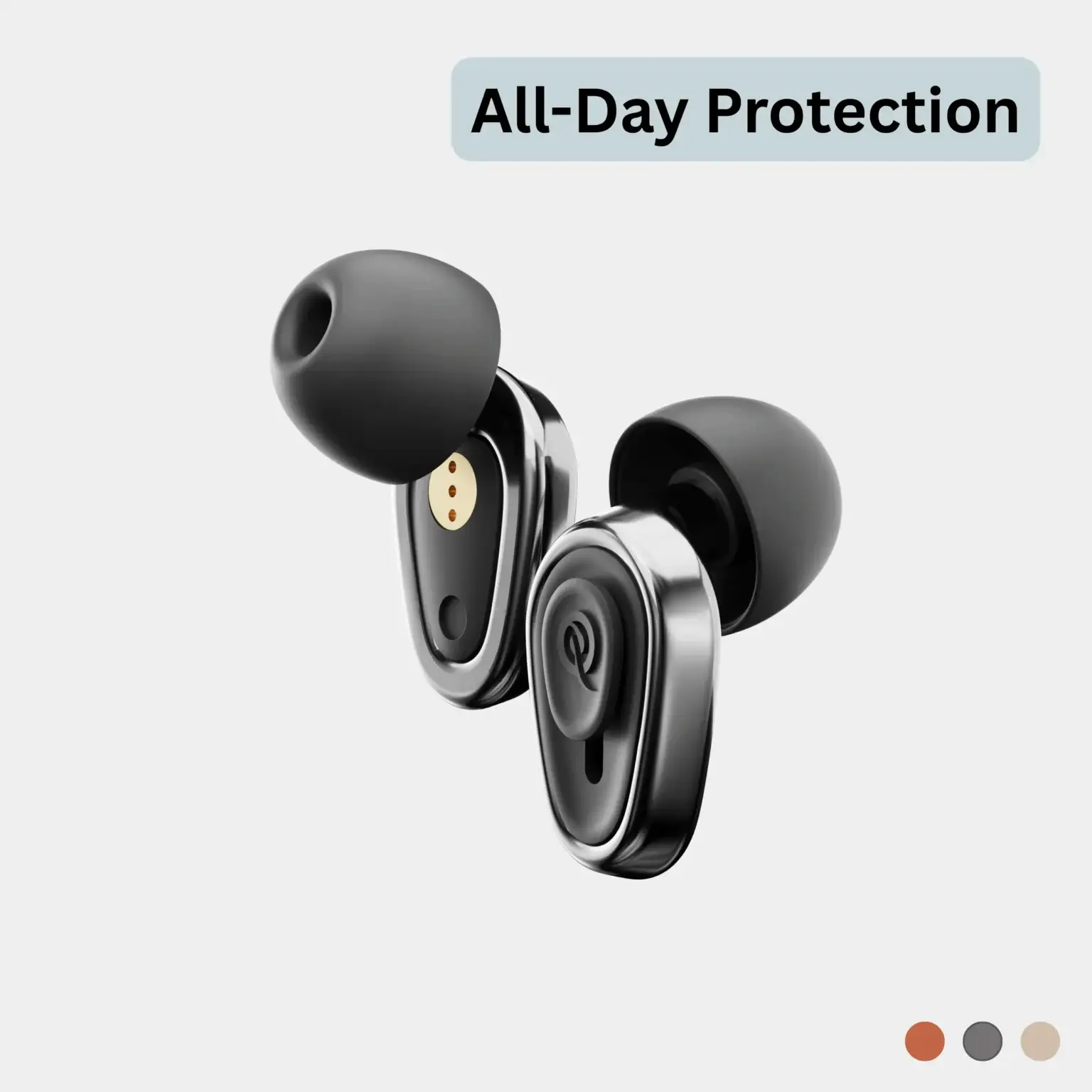
Filtered earplugs work differently. They are compact, reusable and do not need charging. They can be worn in places where headphones are impractical, including during sleep, at live music, under many helmets and when you simply do not want anything visible or bulky.
For the strongest everyday setup, match the tool to the moment. Use headphones when you want audio and quiet on a journey. Use passive sleep plugs when rest is the priority. Use filtered earplugs when you want to stay present while turning the volume down.
Choose for your day, not just your ears
If you want the most complete reduction possible, start with passive earplugs. If you want to lower volume while keeping speech, music and daily awareness more natural, start with filtered earplugs. There is no prize for enduring more noise than you need to, and no need to make every environment silent.
Earmuffz treats hearing comfort as total volume control: a practical way to protect your focus, your sleep and your capacity for the things you enjoy. Keep the pair that suits your routine close by. When the noise rises, you will be ready to own the moment rather than endure it.