

Types of Earplugs: How to Choose the Right Pair for Your Lifestyle
If you have ever grabbed a pair of yellow foam earplugs from a pharmacy shelf and assumed that was the extent of the options, you are not alone. Most people have never had a reason to look further. But the different types of earplugs available today solve very different problems, and picking the wrong one tends to mean either poor protection or a pair you stop wearing after ten minutes.
This guide covers the main earplug types, what each one is genuinely good at, and where each falls short. By the end, you should have a clear sense of which one suits your situation, whether that is better sleep, a loud commute, a weekend festival, or something in between.
Comparing the Main Types of Earplugs
The table below summarises the main earplug categories across the factors that tend to matter most when choosing.
* 4-level adjustable noise reduction is exclusive to the Earmuffz Complete Series.
Each type comes with its own trade-offs, so here is what you actually need to know about each one.
Foam Earplugs: High Blocking Power, Low Adaptability
Foam earplugs are the most widely available option on the market. You roll the compressed foam down, insert it into the ear canal, and the material expands to form a seal. They typically carry Noise Reduction Ratings (NRR) of 29-33, among the highest for any consumer earplug type.
For short-term, high-noise tasks like running power tools, working in a loud factory, or mowing the lawn, foam does the job. They are inexpensive and disposable, which is practical in settings where you would not want to keep track of a reusable pair.
The limitation is that foam blocks sound indiscriminately. Voices become difficult to understand. Music sounds muffled. Wearing a foam earplug to a concert or a busy office does not reduce the noise so much as it disconnects you from everything around you. The fit is also inconsistent. Because ear canals vary significantly between people, the same foam plug that creates a solid seal for one person may sit loose in another. They are also single-use, which adds up in cost and waste over time.
Foam earplugs are worth considering if you need maximum noise blocking for a specific, short-duration task and sound quality is not a factor.
Silicone Earplugs: A More Comfortable Step Up
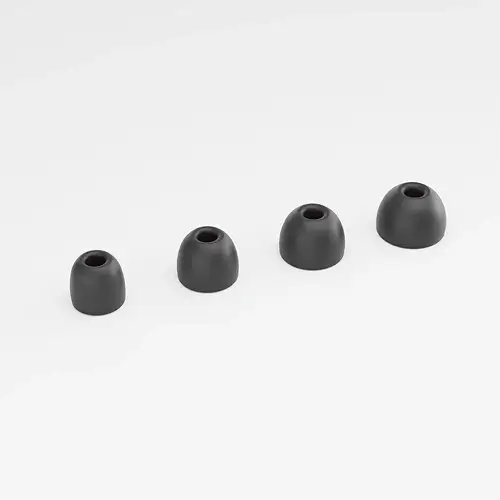
Silicone earplugs come in two forms. Pre-molded silicone plugs have a fixed shape and often come in multiple sizes to improve fit. Moldable silicone plugs are soft and pliable; you press them over the outer ear rather than inserting them into the canal.
Both are reusable and washable, which makes them more practical and cost-effective over time. Pre-molded versions generally offer better comfort than foam for extended wear, and moldable silicone is a popular choice for sleep because it conforms to the ear without creating pressure inside the canal.
The trade-off is similar to foam: most silicone earplugs offer fixed, undifferentiated noise reduction with no way to adjust the level. They work well for simpler use cases where a moderate, consistent block is enough. For commuting, concerts, or any setting where you need to stay aware of your surroundings, the lack of adjustability is a meaningful limitation.
Silicone earplugs are worth considering if you want a reusable, washable option for sleep or swimming and do not need to adjust your level of noise reduction depending on your environment.
Wax Earplugs: A Specialist Sleep and Swim Option
Wax earplugs are typically made from a blend of natural wax and cotton. Like moldable silicone, they sit over the outer ear and form a seal from the outside. They are soft enough to wear lying down without discomfort, which makes them a longstanding favorite for sleep.
Outside of sleep and water protection, wax has limited appeal. It degrades with use, so most pairs are not reliably reusable. For anyone looking for a versatile everyday earplug, wax is not a practical fit.
Wax earplugs are worth considering if you want a soft, comfortable option specifically for sleep or swimming, and do not need the pair to do much else.
Filter-Based Earplugs: Noise Reduction That Keeps You Present
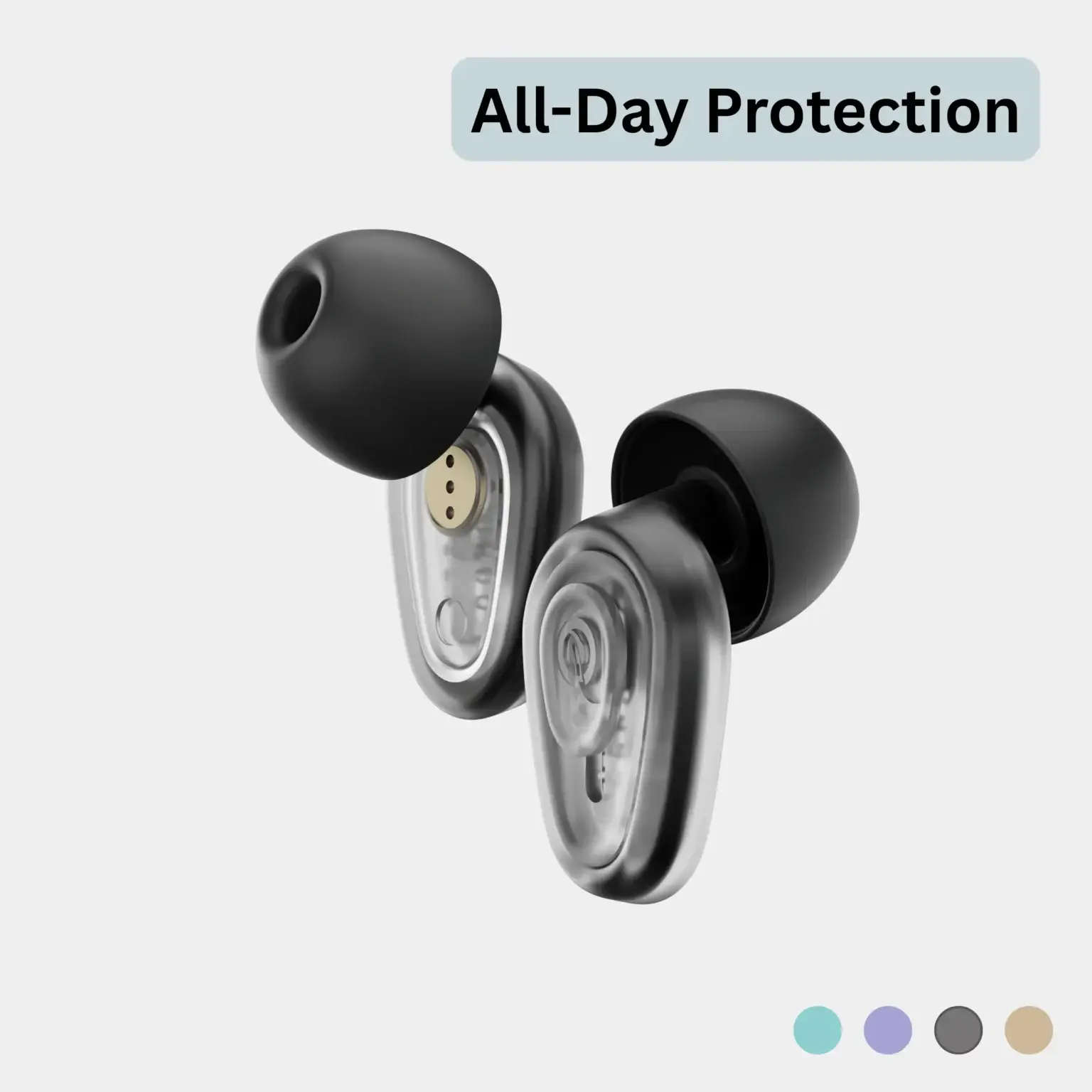
Filter-based earplugs work differently from every other type on this list. Instead of blocking sound with dense material, they use internal acoustic filters to selectively reduce noise. Harmful or distracting sound levels drop; the natural shape and clarity of what you hear remain largely intact. Voices still sound like voices. Music still sounds like music.
This design makes filter-based earplugs the most adaptable option for everyday use. They are well-suited to concerts and live events, where preserving the quality of the music matters as much as protecting your hearing. They work for commuting, where you want to take the edge off road or train noise without losing awareness of your surroundings. They are useful for focus work, where reducing distraction is the goal, and for travel, noisy neighborhoods, or any situation where a foam plug would leave you feeling cut off.
How Earmuffz Builds On Filter Technology
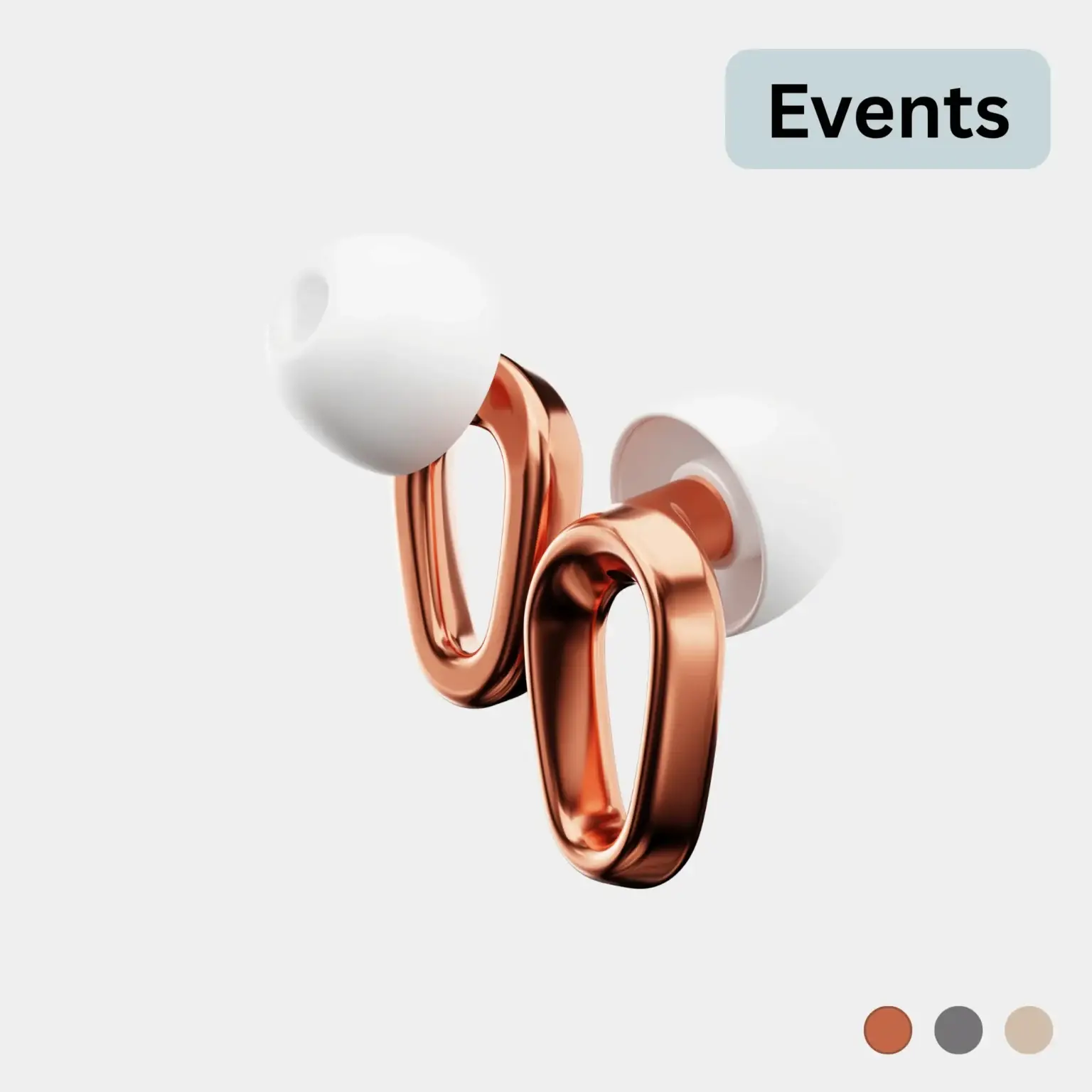
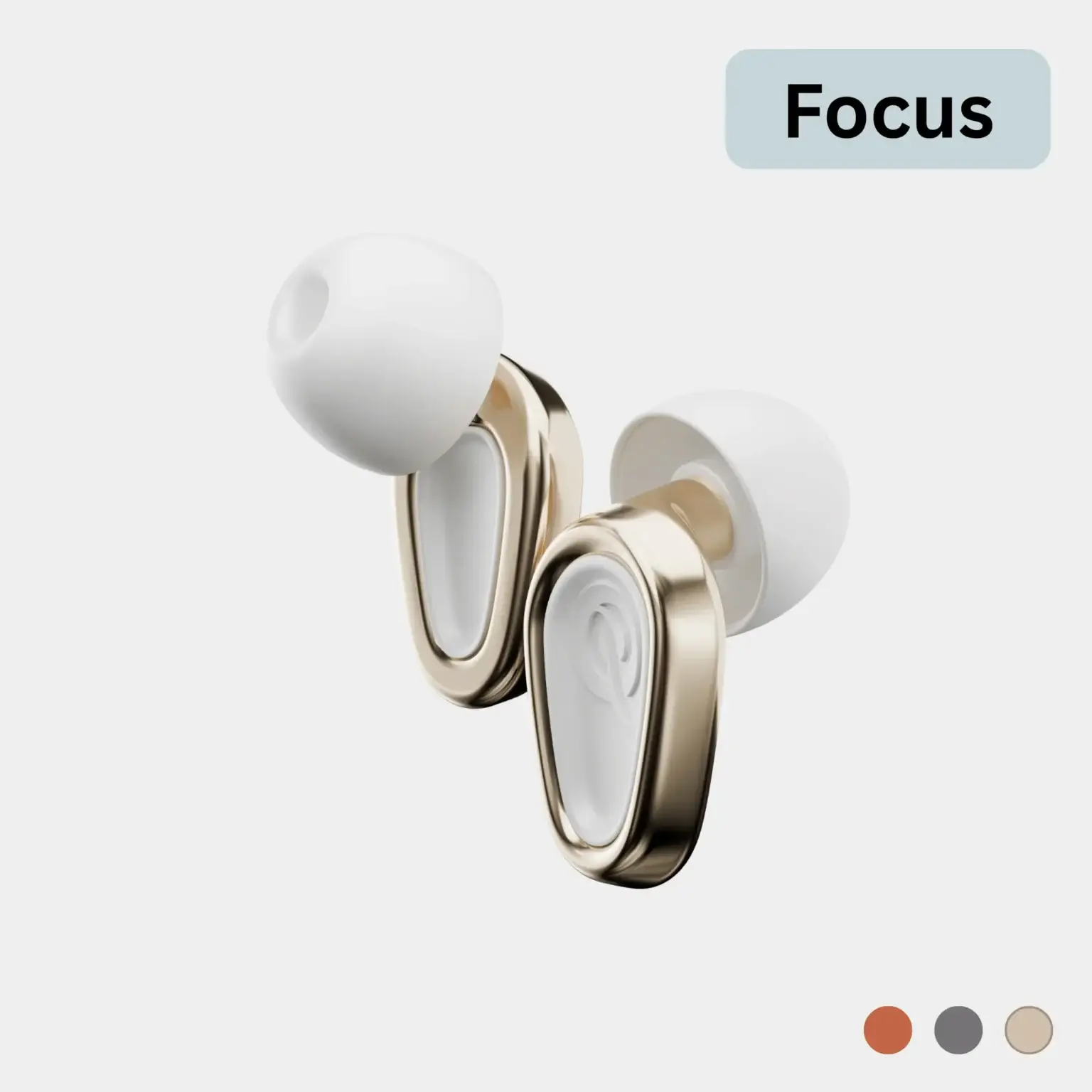
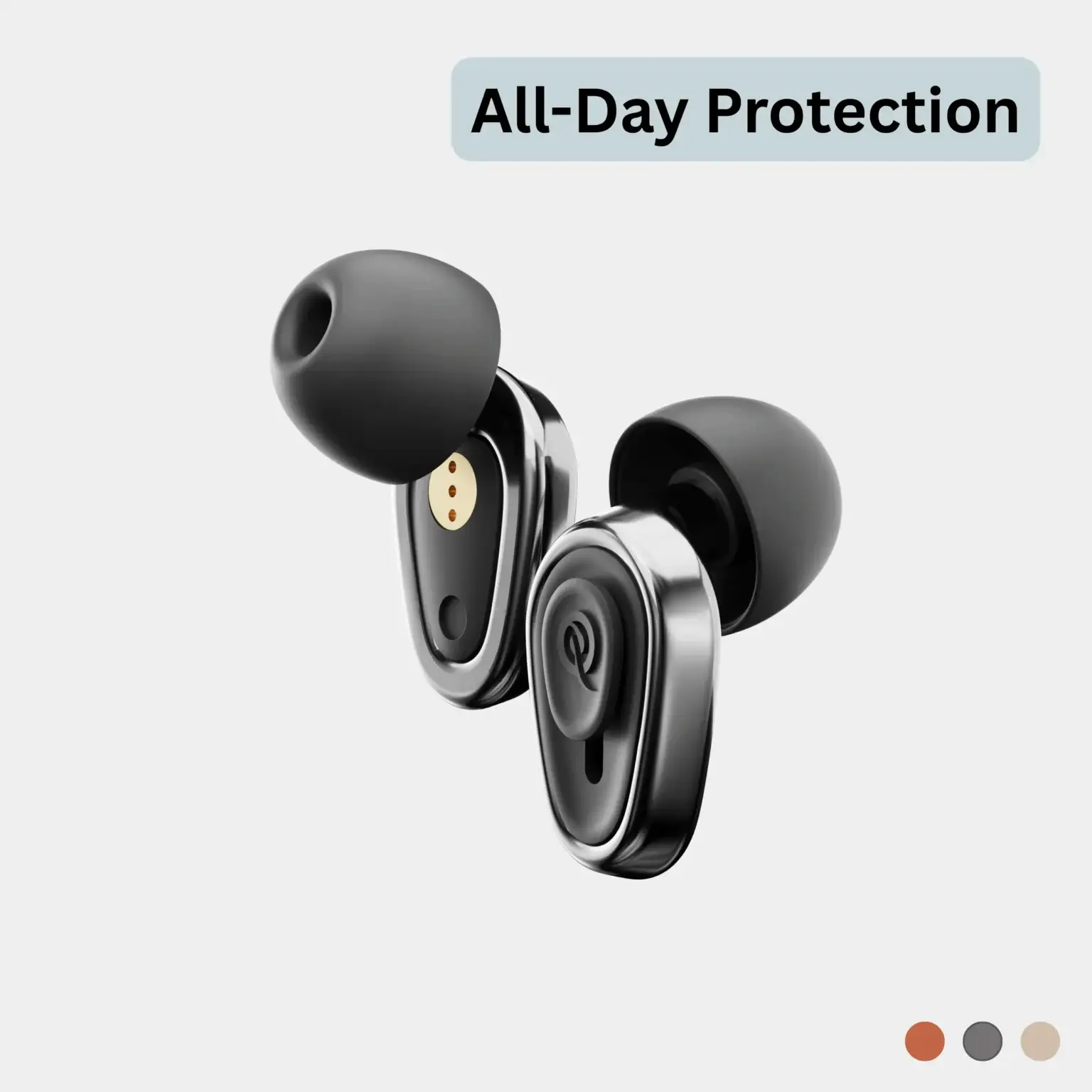
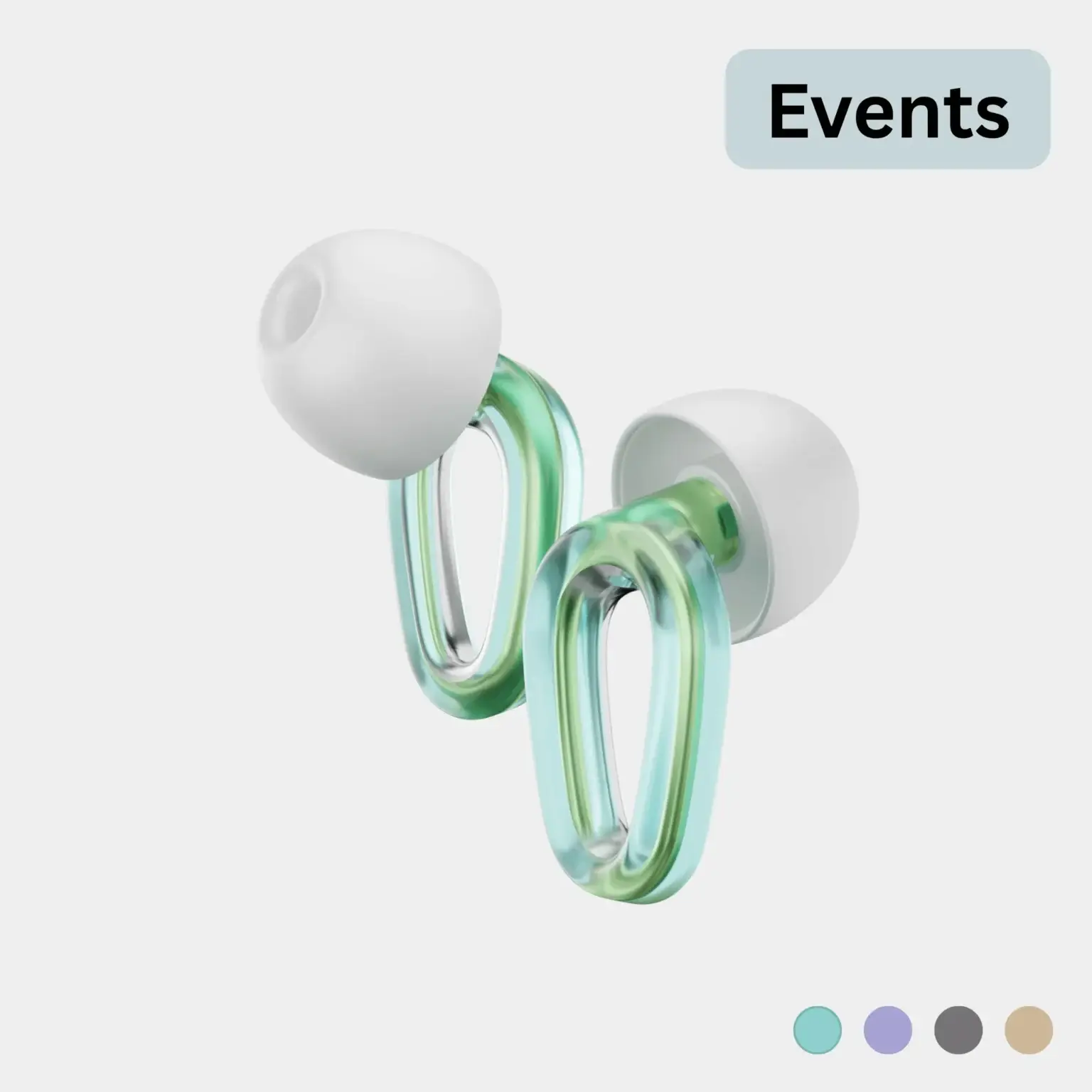
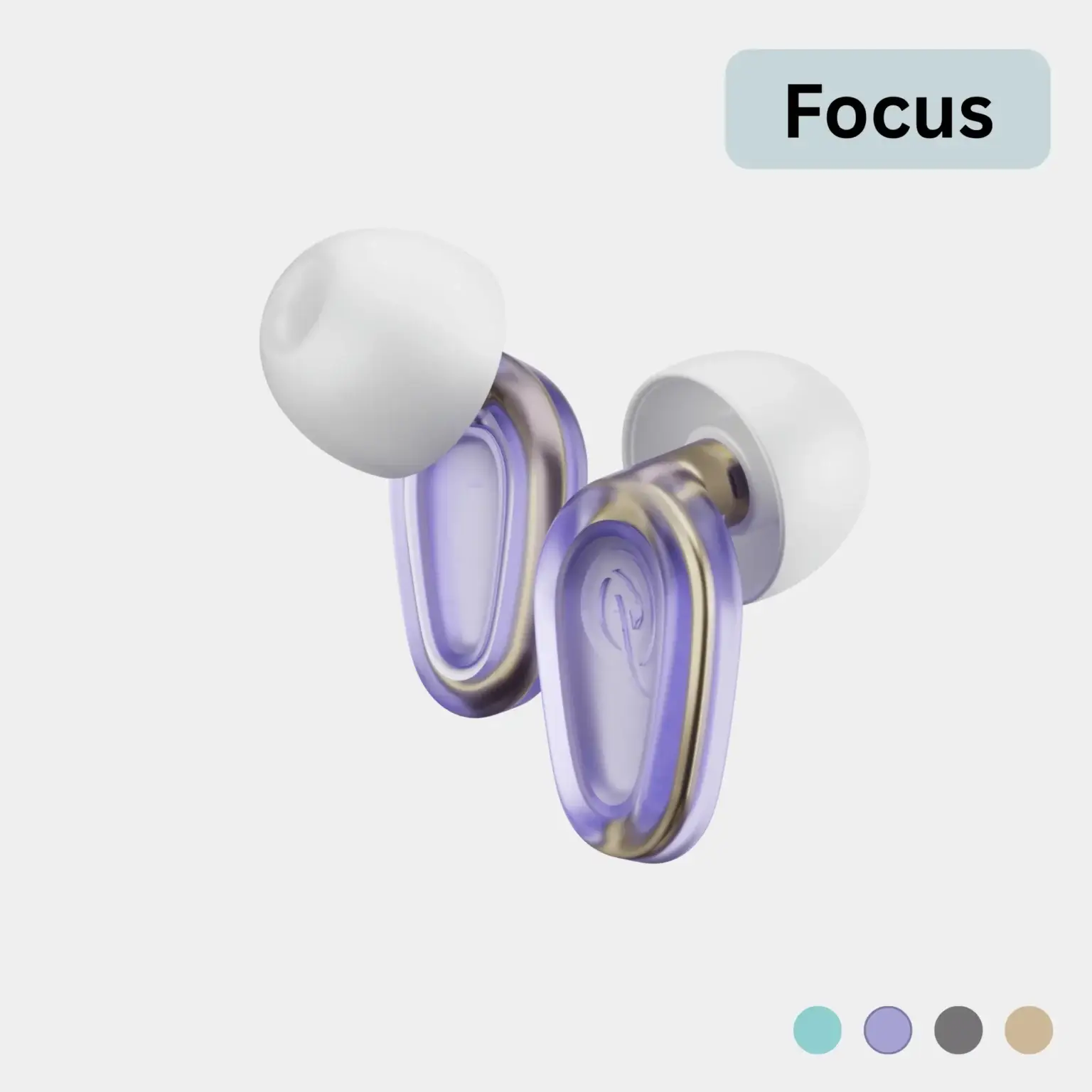
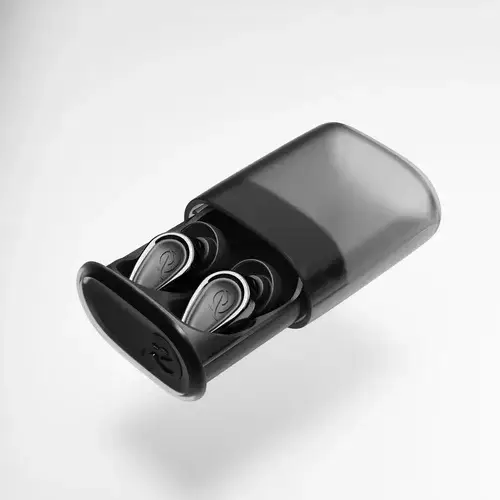
Earmuffz earplugs use a patented, removable noise filter system that goes a step further than standard filter designs. Rather than offering a single fixed level of attenuation, the filter manipulates airflow to give you direct control over the amount of noise reduction you want. The Complete Series (available as the Classic Complete and Premium Complete) offers up to four adjustable noise-reduction levels. A lower setting for a crowded office or a train platform. A higher setting for a loud venue or a worksite.
Earmuffz earplugs are also ANSI and EN352 certified, meeting recognized international safety standards for professional and industrial environments. That certification matters for anyone who needs hearing protection that satisfies workplace compliance requirements.
Filter-based earplugs are worth considering if you need hearing protection across multiple settings, want to maintain sound clarity while reducing noise, or have grown frustrated with earplugs that muffle everything. They are the most versatile option for daily use.
Custom-Molded Earplugs: Maximum Precision, Maximum Cost
Custom-molded earplugs are made from impressions of your individual ear canals, usually taken by an audiologist. The result is an exceptionally precise fit and high comfort for extended wear. That makes them valuable for professionals in sustained high-noise environments, including musicians, audio engineers, and industrial workers who wear protection for full shifts.
The barriers are significant. The process requires an audiologist appointment, a waiting period for fabrication, and an upfront cost that often runs into the hundreds. They are also fixed in their noise reduction level, with no adjustability. For most people, a well-designed filter earplug covers the same ground for a fraction of the cost and is available the same day.
Custom-molded earplugs are worth considering if you wear hearing protection for many consecutive hours in a professional setting, fit consistency over long durations is essential, and cost is a secondary consideration.
Matching the Earplug to Your Situation
The right choice depends almost entirely on where and how you plan to use them. A few questions that help narrow it down:
- Do you need to hear clearly while reducing noise? Filter-based earplugs are designed for exactly this. Foam and wax are not.
- Do you use earplugs in more than one setting? An adjustable filter earplug travels better than a dedicated pair for each environment. The Earmuffz Complete Series handles a concert on Friday and a commute on Monday without switching products.
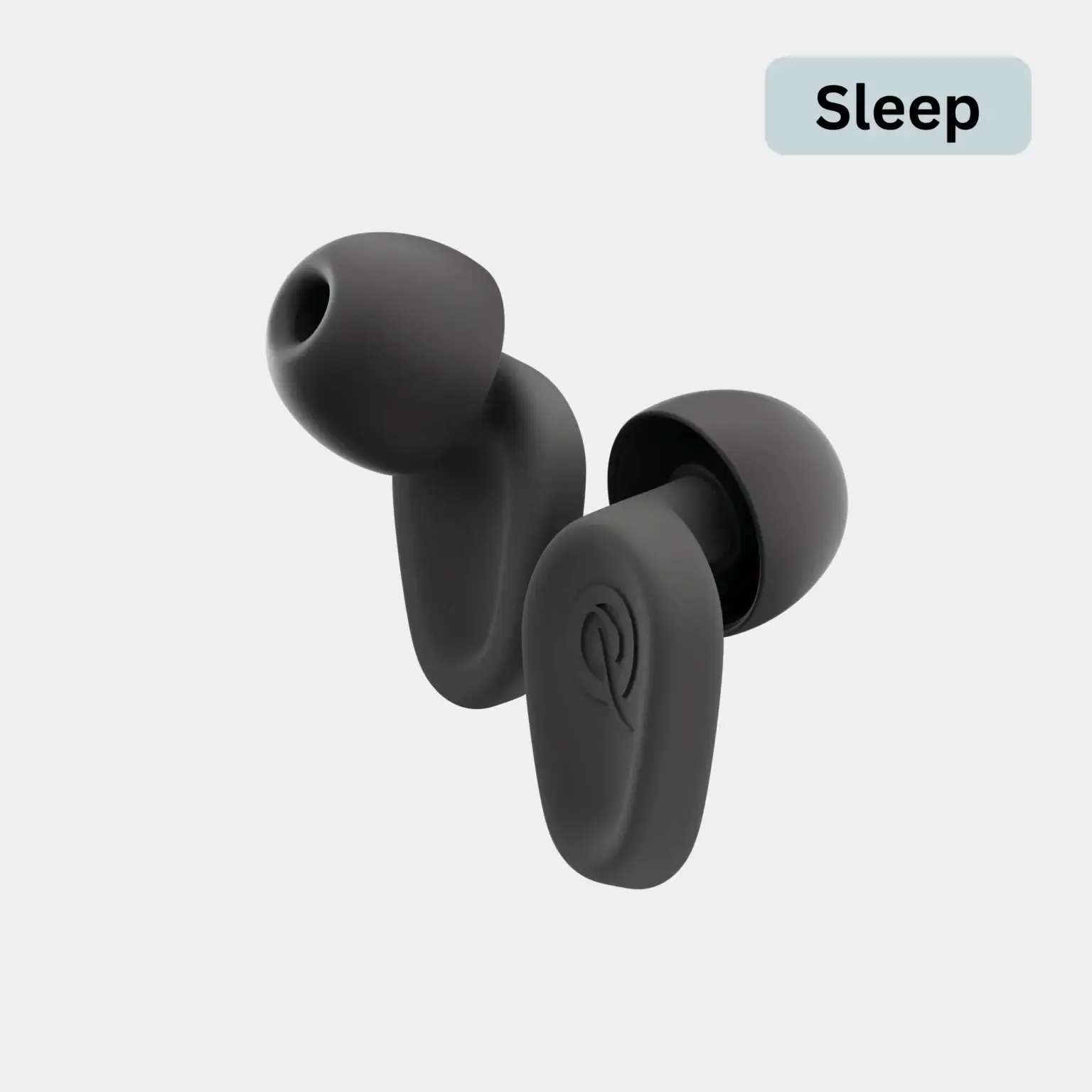
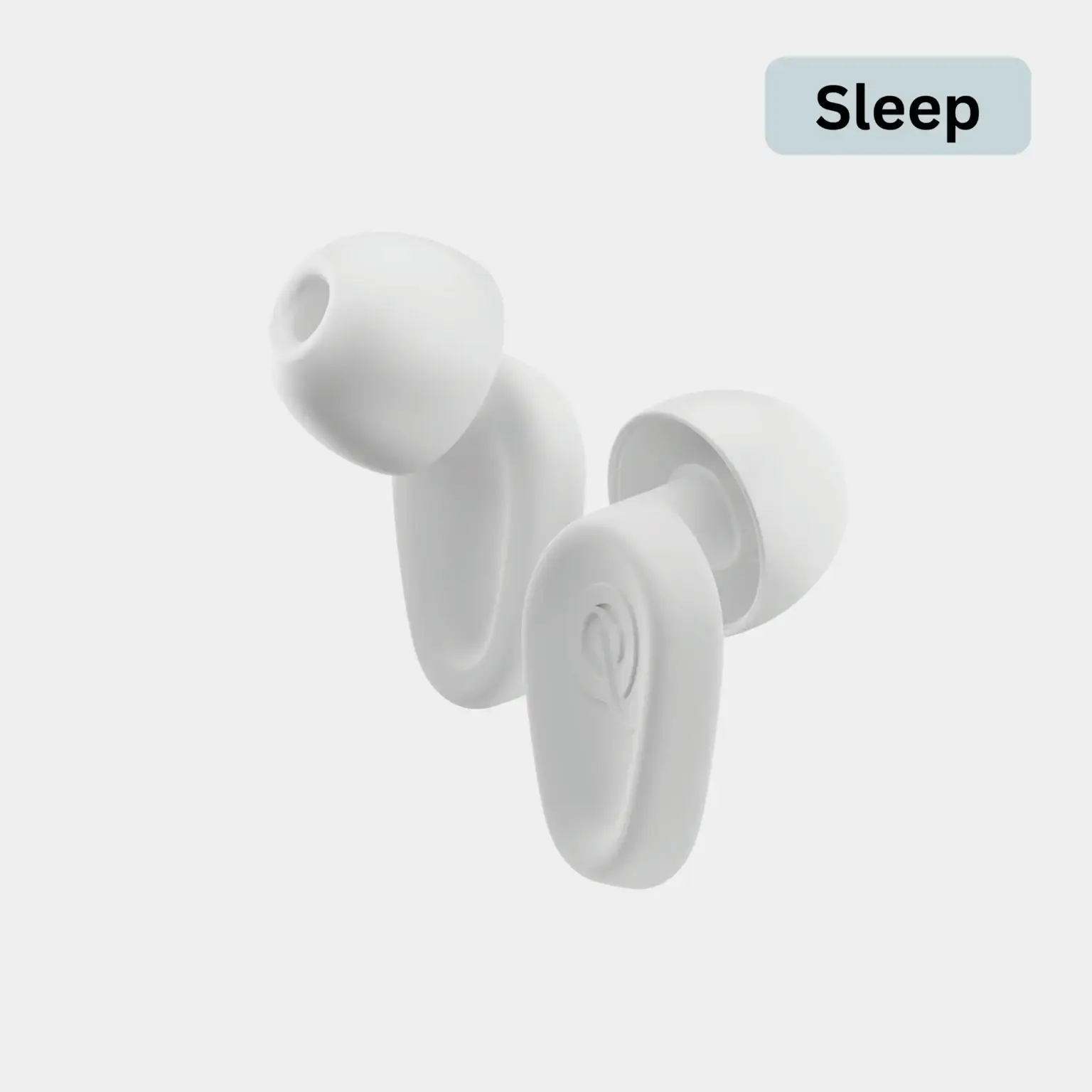
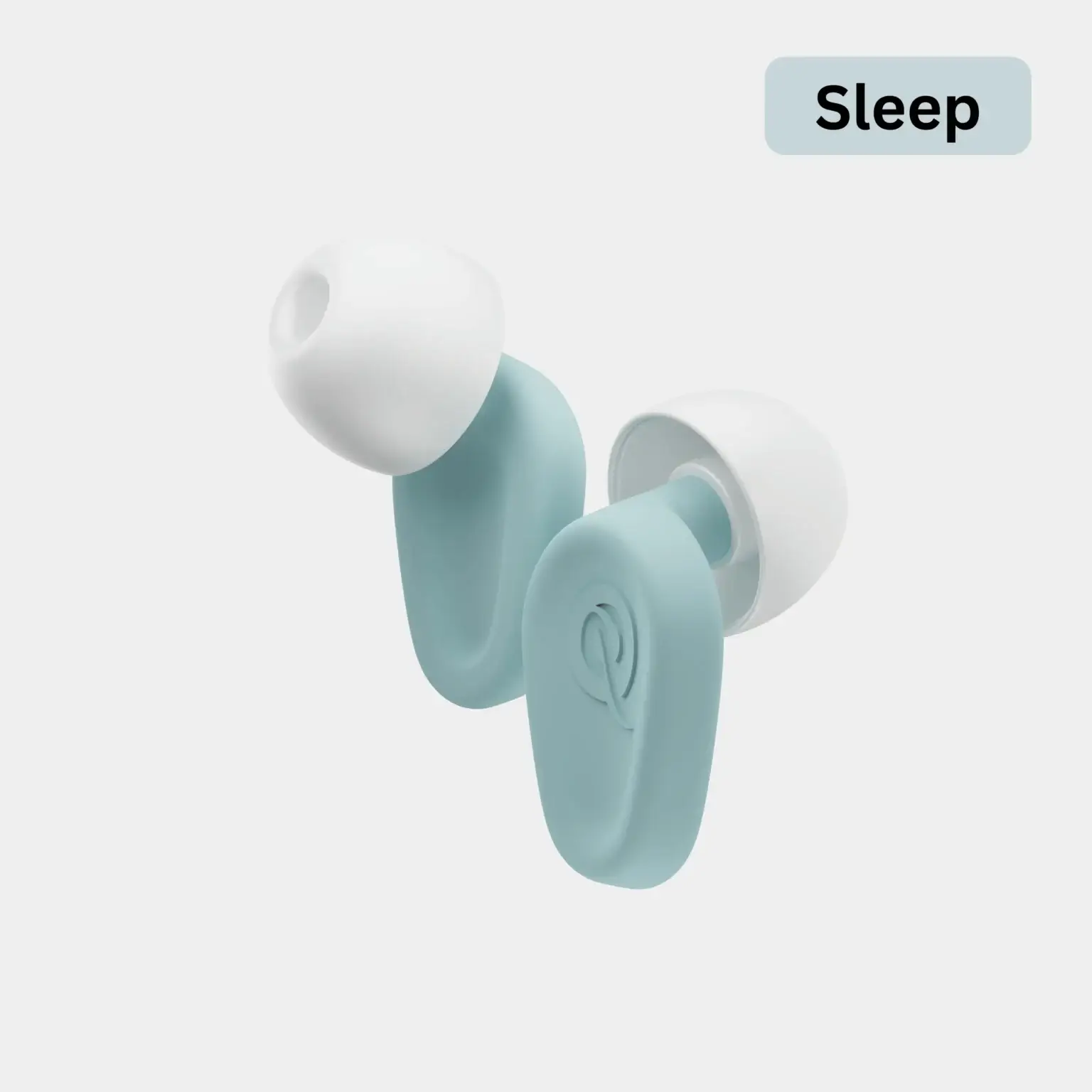
- Is your main concern getting a better night’s sleep? Soft silicone or wax works for light sleepers dealing with occasional noise. If noise is a persistent disruption, the Earmuffz Sleep Series is designed to address that specific problem.
- Do you work in a regulated environment that requires certified hearing protection? Look for ANSI and EN352 compliance. Both are standard markers of professional-grade protection.
If you are still unsure which type fits your life, the Find Your Pair Quiz asks a few straightforward questions about your lifestyle and noise environment and points you toward the right fit.
Frequently Asked Questions About Earplug Types
Which types of earplugs block the most noise?
Foam earplugs and custom-molded earplugs generally offer the highest raw noise reduction. Both types attenuate sound indiscriminately, though, which tends to muffle speech and music. For strong noise reduction that still preserves sound clarity, adjustable filter earplugs are the better choice for most everyday situations.
What is the safest type of earplug for sleeping?
Moldable silicone and natural wax earplugs are well-suited to sleep, particularly for side sleepers. Because they sit over the opening of the ear canal rather than inside it, they tend to be more comfortable to wear when lying down for extended periods. If you prefer a reusable insert-style earplug for sleep, look for models designed specifically with soft, low-profile tips for overnight wear.
Can you wash and reuse all types of earplugs?
No. Foam and wax earplugs are designed to be disposable or limited-use; washing them breaks down the material and reduces their effectiveness. Pre-molded silicone, custom-molded, and filter-based earplugs are fully reusable and can be cleaned with warm water and mild soap. If you are washing filter-based earplugs, remove the acoustic filters first.
What is the difference between high-fidelity and traditional earplugs?
Traditional earplugs like foam or wax work by physically blocking sound, reducing volume, but distorting what you hear. High frequencies tend to get cut more than low ones, leaving speech and music sounding muffled. High-fidelity filter earplugs reduce volume more evenly across frequencies, so the sound you hear is quieter but recognizable. You can follow a conversation, hear a band clearly, and still have your hearing protected.
Find the Pair That Fits How You Actually Live with Earmuffz
Hearing protection works best when you wear it consistently, and it fits your life rather than getting in the way. The gap between a foam plug grabbed from a counter and a filter earplug calibrated to your noise environment is wider than most people expect until they experience it.
Browse our full range of earplugs in the Earmuffz Shop. Hearing For Life starts with the right pair.
